
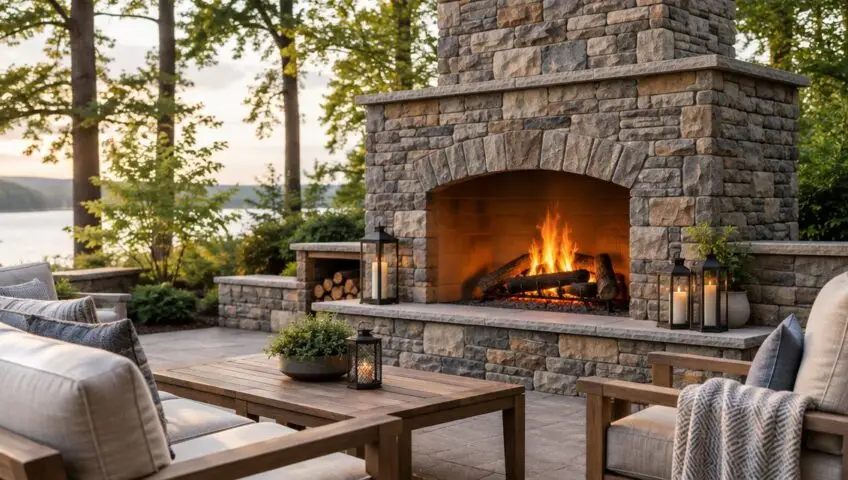
Best overall for a clean-cut outdoor fireplace exterior: granite. Best for a rustic look: fieldstone. Best for a lighter facing assembly: manufactured stone veneer. Best for a smooth, traditional surround: limestone. This 2026 guide compares exterior finishes—not materials for lining the firebox.
- The best stone for outdoor fireplace exteriors depends on appearance, exposure and the specified masonry assembly; granite is the default pick.
- Fieldstone suits rustic fireplaces; manufactured stone veneer suits lighter facing assemblies; limestone suits smooth, traditional surrounds.
- Use specified refractory materials inside the firebox, not ordinary decorative stone.
- Garrisonlandscaping serves Reidsville homeowners planning residential outdoor fireplaces, patios and related hardscape work.
Why the stone choice matters
An outdoor fireplace has different materials doing different jobs. The visible stone supplies the finish; the structure, firebox, chimney and water-management details make the assembly function.
Picking an attractive stone does not settle those other decisions. In Reidsville and Rockingham County, a fireplace project also needs a practical plan for Piedmont red clay, runoff, excavation and access to the backyard.
Garrisonlandscaping is best for homeowners seeking residential outdoor fireplace and hardscape work in Reidsville. Its residential landscaping and hardscaping services include outdoor kitchens and fireplaces, paver patios, retaining walls, drainage and grading—not mowing or yard treatments.
What makes the best stone for an outdoor fireplace?
Judge the complete installation before choosing the finish. For a 2026 project, use these criteria to compare materials and written proposals:
- Exposure suitability: The particular stone or veneer must suit exterior use, local weather and its position on the fireplace.
- Heat separation: Decorative facing and firebox lining have separate roles. Follow the fireplace system’s requirements at the opening and hearth.
- Structural support: Full-depth stone and adhered veneer place different demands on the supporting assembly.
- Water management: Caps, flashing, drainage details and adjacent grading matter as much as the stone face.
- Appearance: Compare texture, joint width, color variation and proportions against your house and patio.
- Repair access: Ask how damaged pieces, failed joints or concealed water problems would be addressed.
Outdoor fireplace stone options at a glance
| Rank and material | Best for | Standout feature | Key limitation |
|---|---|---|---|
| 1. Granite | Clean-cut exterior masonry | Dense stone available in cut shapes and varied finishes | Full-depth construction needs appropriate support; granite is not a firebox lining |
| 2. Fieldstone | Rustic, irregular fireplaces | Natural variation in shape, texture and color | “Fieldstone” does not identify a single rock type or performance standard |
| 3. Manufactured stone veneer | Lighter decorative facing | Concrete-based units create a stone-like exterior finish | Installation depends heavily on the specified substrate and moisture details |
| 4. Limestone | Smooth, traditional surrounds | Cut profiles and a comparatively uniform appearance | Suitability varies by stone; acidic cleaners can damage the surface |
These rankings describe use cases, not interchangeable construction specifications. A material that suits the exterior face does not automatically suit the hearth, chimney cap or area exposed to flame.
1. Granite: best stone for clean-cut exterior masonry
Granite is the default exterior choice when you want defined edges, a substantial stone appearance and a finish that works with a formal patio. Specify stone intended for the proposed exterior application rather than choosing solely from a countertop sample.
Granite can form the visible facing, but the assembly still needs a correctly designed foundation, backing and cap. Do not treat its reputation for hardness as permission to expose ordinary granite directly to fire.
Granite pros:
- Cut pieces support straight lines and consistent courses.
- Different surface finishes provide alternatives to a polished appearance.
- Dense granite is generally less absorbent than many porous building stones.
Granite cons:
- Full-depth granite adds substantial dead load to the structure.
- Dark colors, pronounced patterns or highly finished surfaces can dominate a small patio.
- Natural granite is not a substitute for specified refractory firebox materials.
Best for: Homeowners who want a deliberately built, clean-edged fireplace rather than a loose, rustic composition.
Ask to see the proposed finish outdoors beside your pavers. A polished sample viewed indoors does not show how a textured exterior installation will look.
Verdict: Buy granite for the exterior when you want clean lines and the supporting assembly is properly specified.
2. Fieldstone: best stone for a rustic outdoor fireplace
Fieldstone describes stone gathered from fields or similar surface deposits, not one particular geology. Its irregular shapes and mixed tones suit fireplaces intended to look less formal.
That variation is also the main buying caution. Ask what stone is actually being supplied, whether it suits exterior masonry and how the installer will handle joints, corners and the fireplace opening.
Fieldstone pros:
- Irregular pieces create a distinctly rustic surface.
- Mixed shapes allow a less repetitive arrangement.
- Natural color variation can connect the fireplace visually with planting beds and other stonework.
Fieldstone cons:
- The name alone does not establish absorption, strength or weather resistance.
- Irregular pieces require careful layout and joint work.
- A small sample cannot represent the whole installation’s color range.
Best for: Homeowners seeking a rustic focal point beside an informal patio or planted backyard.
Choose fieldstone by viewing a representative grouping, not a single attractive piece. Confirm whether the proposal calls for full-depth stone or natural thin veneer; the finished look alone does not tell you the assembly’s weight or support requirements.
Verdict: Buy fieldstone for rustic character; skip unidentified stone with no clear exterior-use specification.
3. Manufactured stone veneer: best for lighter facing assemblies
Manufactured stone veneer uses concrete-based units shaped and colored to resemble natural stone. It is a decorative facing, not the structural fireplace or the lining that contains the fire.
Compared with full-depth masonry stone, manufactured veneer offers a lighter facing approach. That does not remove the need for suitable support, approved installation materials or water-management details.
Manufactured stone veneer pros:
- Coordinated shapes help establish a consistent pattern.
- Corner units can help finish exposed edges.
- The facing weighs less than a comparable full-depth stone installation.
Manufactured stone veneer cons:
- Repeated molds can become noticeable if pieces are poorly distributed.
- Cut edges need careful placement and finishing.
- Incorrect substrate, flashing or installation details can create concealed problems.
Best for: Homeowners who want a stone-like exterior where a lighter facing assembly suits the fireplace design.
Ask for the veneer manufacturer’s installation instructions and confirmation that the proposed use complies with the fireplace system’s requirements. A good-looking sample board does not answer questions about heat exposure or moisture behind the facing.
Verdict: Buy manufactured stone veneer when the specified assembly supports it; skip proposals that describe only the surface finish.
4. Limestone: best stone for a smooth, traditional surround
Limestone suits a fireplace with restrained texture, cut edges and a traditional architectural appearance. It provides a different look from the mixed shapes of fieldstone or the crystalline pattern of granite.
Limestone varies in density, absorption and exterior suitability. Select a particular building stone for the application rather than assuming every pale limestone performs alike.
Limestone pros:
- Cut pieces support simple, defined profiles.
- A relatively uniform appearance keeps the fireplace visually quiet.
- The material works with traditional masonry detailing.
Limestone cons:
- Some limestone is more absorbent or weather-sensitive than other selections.
- Acidic cleaners can etch the surface.
- Pale finishes make soot and other dark marks conspicuous.
Best for: Homeowners who prefer a smooth, traditional surround and accept material-specific cleaning requirements.
Ask how exposed horizontal pieces will shed water and which cleaning products are permitted. Do not assume the facing stone is also the right choice for every ledge, cap or hearth surface.
Verdict: Buy limestone for its appearance only after confirming exterior suitability and care requirements.
How these stones were ranked
Granite takes the default position for a clean-cut exterior because it combines dense building stone with varied finishing options. Fieldstone, manufactured veneer and limestone take distinct positions based on rustic appearance, facing weight and traditional detailing.
The ranking does not claim that one stone fits every fireplace. The approved assembly comes first; the decorative stone comes second.
Plan the fireplace from the ground up
Before ordering stone for a 2026 installation, settle the construction sequence. A fireplace added beside an existing patio needs more planning than choosing a finish that matches the pavers.
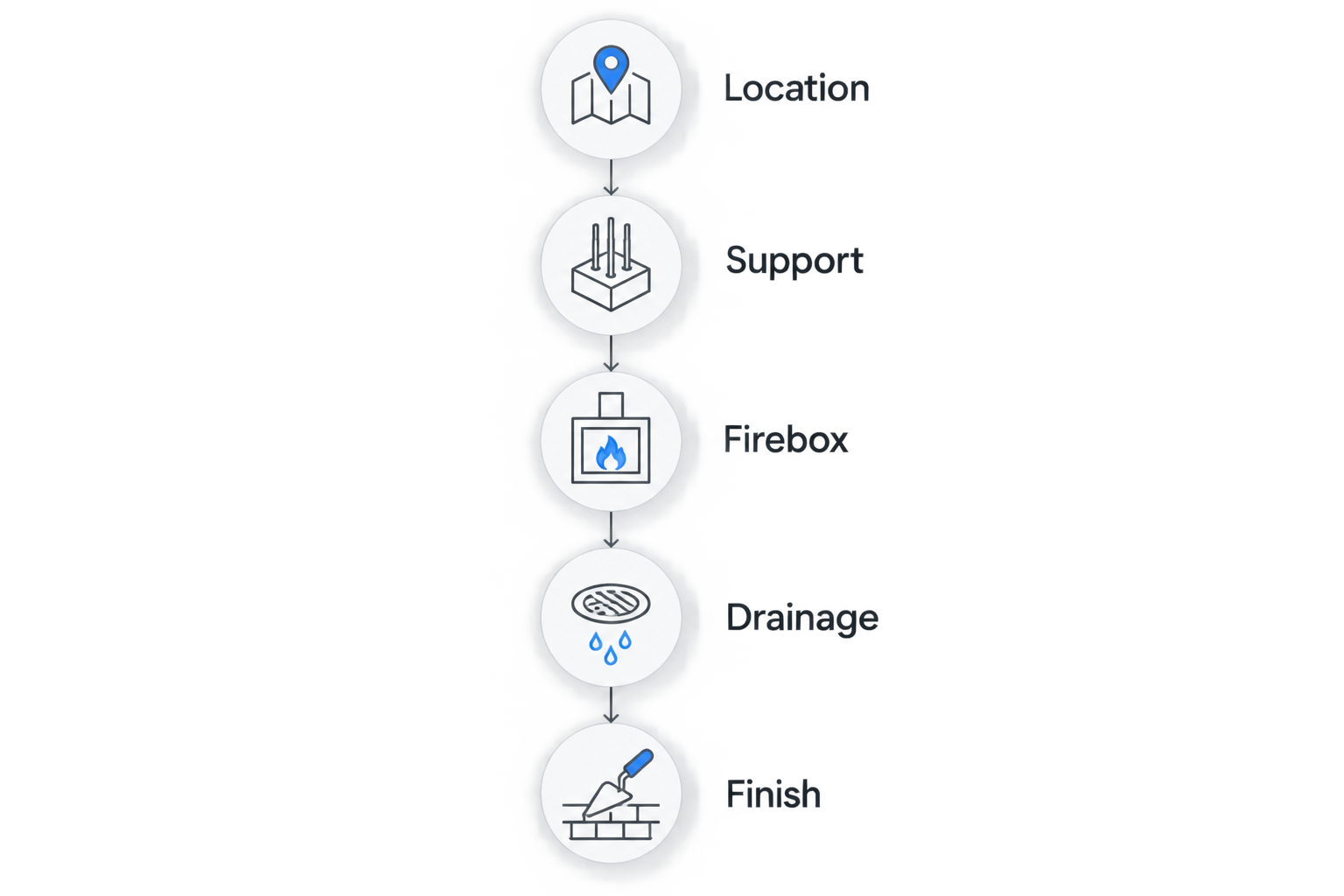
Start with these site decisions
- Location: Establish the fireplace position, seating layout and relationship to the house. Confirm applicable local requirements before construction.
- Support: Have the installer explain what supports the fireplace. Do not assume an existing paver patio can carry masonry fireplace loads.
- Firebox: Choose the fireplace system and its required refractory materials before finalizing the surround.
- Drainage: Plan how the cap, surrounding ground and adjacent paving will move water away.
- Finish: Select the facing, joints and edge details after the underlying assembly is settled.
Piedmont red clay makes wet-weather site conditions part of the discussion. If water already collects near the proposed fireplace, include drainage solutions for a soggy yard in the project plan rather than treating drainage as a later repair.
A French drain is not an automatic answer to every wet area. The contractor needs to identify the water source, surface grades and a suitable discharge arrangement before recommending a solution.
What changes an outdoor fireplace quote?
For a 2026 estimate, ask for a defined scope rather than a single description such as stone fireplace. The visible facing is only part of the work.
- Site access: Gate width, slopes and the route through the yard affect material handling and equipment access.
- Excavation and support: Existing conditions determine removal, preparation and foundation work.
- Drainage and grading: Runoff problems can require work beyond the fireplace footprint.
- Material and layout: Full-depth stone, thin veneer, cut profiles and irregular patterns involve different installation tasks.
- Height and scope: Fireplace height, chimney design, hearth size and adjoining walls change the project.
- Connected work: Patio changes, retaining walls and an outdoor kitchen expand the estimate beyond the fireplace itself.
Garrisonlandscaping handles residential hardscaping, drainage and grading, with homeowners dealing directly with the owner. Describe the whole backyard project when requesting an estimate, including any retaining wall or patio work.
Request an outdoor fireplace estimate
Share your Reidsville or Rockingham County site, fireplace plans, access limits and drainage concerns.
Which stone should you choose?
Choose granite as the default for a clean-cut exterior; choose another material only when its particular appearance or assembly advantage fits your project better. Fieldstone is the rustic choice, manufactured veneer serves lighter facing assemblies, and limestone suits a smoother traditional finish.
Before approving your 2026 selection, compare at least 3 sample pieces to see variation. View them from 2 locations—beside the house and beside the patio—and compare 2 written proposals against the same fireplace scope if you are evaluating contractors.
Those are buying checks, not engineering specifications. The installer still needs to explain the foundation, firebox, chimney, water control and material compatibility.
FAQ
What’s the best stone for an outdoor fireplace?
Granite is the default recommendation for a clean-cut exterior facing. Fieldstone suits rustic designs, manufactured stone veneer suits lighter facing assemblies, and limestone suits smooth traditional surrounds; none replaces the specified firebox lining.
Can I use the same stone inside and outside an outdoor fireplace?
Do not assume decorative exterior stone is suitable inside the firebox. Use the refractory materials and installation details specified for the fireplace system, and confirm requirements around the opening and hearth.
Is manufactured stone veneer better than natural stone?
Manufactured stone veneer is better when a lighter facing assembly and coordinated shapes suit the design. Natural stone offers genuine geological variation, but both choices depend on correct support, installation and water management.
Can an outdoor fireplace sit on my existing paver patio?
Do not assume an existing paver patio can support a masonry fireplace. Have the proposed loads and support requirements evaluated before deciding whether paving must be removed for foundation work.
Does outdoor fireplace stone need sealing?
Sealing depends on the particular stone, exposure and installation requirements. Ask for written care instructions and confirmation that any proposed sealer is suitable for the material and its position on the fireplace.
What should I include in a 2026 outdoor fireplace estimate request?
Include site photos, your location, the proposed fireplace position, fuel preference, access restrictions and known drainage problems. Identify related patio, retaining wall or grading work so the estimate covers the intended project.
Does an outdoor fireplace need a permit in Rockingham County?
Confirm permit and inspection requirements with the authority responsible for your property before construction. Requirements depend on jurisdiction and project details, including the fireplace construction and any fuel connections.
One last thing
The stone face is the easiest part of a fireplace to inspect and the easiest part to let distract you. Ask the installer to explain how the top sheds water before approving the front.
For a 2026 project with Garrisonlandscaping, bring photos showing the entire proposed area—not just a close-up of the fireplace location. Include the house, patio edges, slope and access route so the conversation covers the site as well as the stone.
Related guides
- Best pavers for a patio
- Best fire pit materials for outdoor living
- Best outdoor kitchen countertop materials