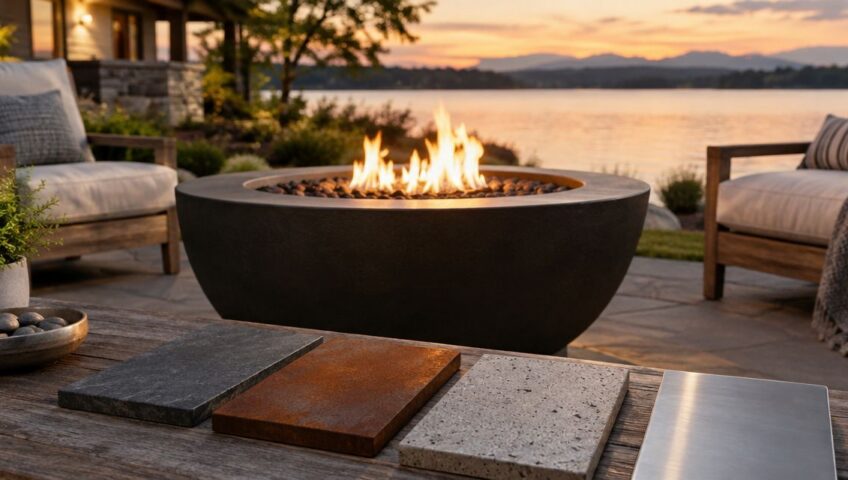
Best overall: a concrete-block fire pit system with its specified heat protection. Best for a traditional masonry firebox: firebrick. Best for matching a stone patio: natural stone over a protected firebox. Steel suits a contemporary insert; cast iron suits a movable bowl. This 2026 guide compares the best fire pit materials for Reidsville and Rockingham County backyards.
- The best fire pit materials separate the heat-rated firebox from the decorative outer shell.
- Choose a concrete-block fire pit system for a permanent patio feature, following its lining and fuel requirements.
- Use natural stone as a facing, not an assumed substitute for a heat-rated interior.
- Garrison’s Landscaping serves homeowners planning patios, masonry and drainage; discuss the surrounding project before selecting materials.
Why this matters
A fire pit has different jobs inside and outside. The interior must handle the intended fuel and heat; the exterior provides structure, appearance and a finished edge. A material that works well in a walkway does not automatically belong against a fire.
For a permanent installation, consider the surrounding residential landscaping and hardscaping services before choosing the finish. Garrison’s Landscaping is best for homeowners planning a fire pit area as part of a residential patio, masonry or drainage project. Confirm the requested fire feature and its scope directly before requesting an estimate.
In Piedmont red clay, water management belongs in that conversation. A well-chosen shell does not fix a low spot that collects runoff. For your 2026 project, settle the location, drainage and fuel type before ordering materials.
What makes the best fire pit materials?
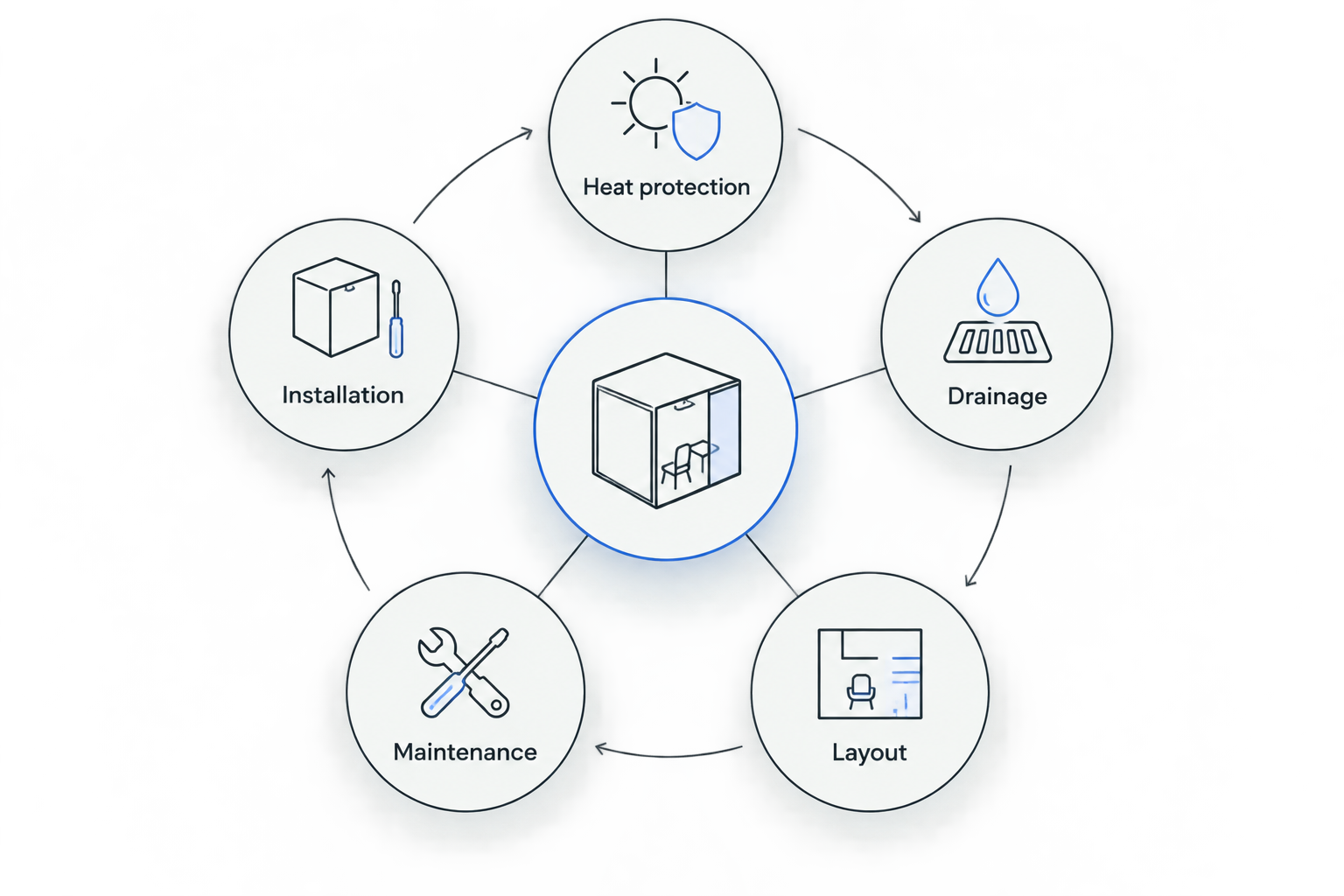
Judge the complete assembly, not a loose block or an attractive stone sample. These criteria determine whether a material fits your yard:
- Heat protection: The firebox, lining or insert must suit the intended fuel and installation. Ordinary landscape materials are not automatically fire-rated.
- Drainage: Rainwater needs a planned route away from the installation without sending runoff toward the house or neighboring property.
- Layout: The bowl or enclosure must fit the patio while leaving usable space for seating and movement.
- Maintenance: Consider ash removal, corrosion, mortar repairs and access to replace worn parts.
- Installation: A permanent masonry feature needs suitable support, preparation and a coordinated plan for any utilities.
Compare these priorities before comparing colors. A removable bowl and a built-in masonry firebox solve different problems, even when both sit on the same type of patio.
Best fire pit materials at a glance
The ranking below separates permanent construction from movable options. It does not treat an outer facing as interchangeable with a firebox lining.
| Material or assembly | Best for | Standout feature | Key limitation |
|---|---|---|---|
| Concrete-block fire pit system | Permanent patio feature | Coordinated enclosure with specified heat protection | Ordinary retaining-wall block is not an equivalent substitute |
| Firebrick with refractory mortar | Traditional masonry firebox | Materials intended for high-temperature applications | Requires suitable masonry detailing and weather protection |
| Natural stone facing | Matching stonework | Connects the fire feature visually to the patio | Needs a separate, suitable heat-facing assembly |
| Steel insert or bowl | Contemporary layout | Defined firebox with a relatively thin profile | Corrosion and replacement access require attention |
| Cast-iron bowl | Movable fire feature | Freestanding format without a permanent masonry enclosure | Heavy to move and vulnerable to rust |
1. Concrete-block systems: best for permanent patio fire pits
A purpose-made concrete-block fire pit system gives you a coordinated enclosure rather than a collection of unrelated landscape blocks. Follow the selected system’s instructions for the base, insert or lining, drainage and permitted fuel. Do not assume a steel ring alone makes any block arrangement suitable.
For a Reidsville patio, this is the default permanent option to investigate first. The important distinction is between a documented fire pit assembly and ordinary concrete blocks arranged around a flame.
Concrete-block system pros:
- Creates a defined, permanent feature within a paver patio.
- Offers coordinated components when supplied as a complete system.
- Gives the installer an identified assembly to follow.
Concrete-block system cons:
- Base movement can affect the finished enclosure.
- Replacement parts must remain compatible with the assembly.
- Suitability depends on the specific system, not concrete alone.
Best for: Homeowners planning a permanent seating area alongside a new or rebuilt patio.
Verdict: Buy a documented fire pit system; skip improvised landscape-block substitutes.
2. Firebrick: best for a traditional masonry firebox
Firebrick is a refractory material made for high-temperature applications. In a masonry firebox, use brick and refractory mortar specified for the intended conditions, including exterior exposure where applicable. Ordinary house brick and general-purpose mortar are not automatic substitutes.
Firebrick addresses the heat-facing interior, not the entire project. You still need a supporting assembly, an exterior finish and details that manage water and movement between components.
Firebrick pros:
- Provides a purpose-selected heat-facing surface.
- Fits a traditional masonry appearance.
- Allows the interior and decorative exterior to serve separate roles.
Firebrick cons:
- Requires careful joints and compatible mortar.
- Does not eliminate weather-related deterioration.
- Adds masonry work beyond placing a freestanding bowl.
Best for: Homeowners choosing a built-in masonry firebox with an intentionally detailed interior.
Ask the installer to identify the brick, mortar and intended fuel in writing. A description that says only “brick fire pit” leaves the most important materials unspecified.
Verdict: Buy firebrick for a specified masonry firebox; skip ordinary brick as a presumed equivalent.
3. Natural stone: best for matching patios and walls
Natural stone works well as a decorative facing around a properly designed firebox. It can connect the feature to nearby steps, a sitting wall or other masonry without making the exposed stone responsible for handling direct flame.
Do not use loose creek rocks or unidentified stone inside the fire. Moisture and heat can cause stone to crack or spall, and appearance does not establish suitability. Keep the heat-facing material separate from the decision about the outer finish.
Natural stone pros:
- Coordinates with existing stonework.
- Provides variation in texture and appearance.
- Lets the exterior finish differ from the firebox lining.
Natural stone cons:
- Irregular pieces require fitting and careful detailing.
- Stone selected for paving is not automatically suitable for direct heat.
- Mortared facing adds joints that need inspection over time.
Best for: Homeowners who want the fire feature to match a stone patio or retaining wall.
For a 2026 patio redesign, select the protected firebox first and approve the facing afterward. That order prevents an attractive stone choice from dictating an unsuitable interior.
Verdict: Buy natural stone for the outer finish; skip unverified stone against the fire.
4. Steel: best for a contemporary insert or bowl
Steel can form a removable insert, a freestanding bowl or part of a manufactured gas fire feature. Those are different assemblies. Choose a product intended for your fuel and installation rather than repurposing an unidentified metal container.
Steel also gives you a practical replacement question: can the insert come out without dismantling the surrounding masonry? Settle that before fixing caps or facing around it.
Steel pros:
- Suits a clean, defined firebox shape.
- Can separate the burning area from a masonry enclosure.
- Allows replacement when the surrounding construction preserves access.
Steel cons:
- Carbon steel rusts when exposed to moisture.
- Stainless steel still needs appropriate care and material selection.
- Heat expansion must be accommodated in the surrounding assembly.
Best for: Homeowners choosing a contemporary feature or a serviceable insert within a permanent enclosure.
For gas, follow the appliance instructions for enclosure construction, ventilation and clearances. A metal bowl does not establish that a homemade gas conversion is suitable.
Verdict: Buy a purpose-made steel fire feature; skip improvised containers and unapproved conversions.
5. Cast iron: best for a movable fire bowl
Cast iron suits a freestanding bowl when you do not want a permanent masonry enclosure. It gives you a separate object to place within an approved layout rather than a feature built into the patio.
Movable does not mean easy to lift, safe on every surface or suitable beneath a roof. Check the product’s weight, supporting-surface requirements and clearances before choosing its position.
Cast-iron bowl pros:
- Does not require a permanent masonry surround.
- Can be removed when you change the patio layout.
- Keeps the fire feature separate from the surrounding paving.
Cast-iron bowl cons:
- Requires corrosion care and dry storage or suitable protection.
- Can be difficult to move safely.
- Becomes hot in use and stays hot afterward.
Best for: Homeowners who want a freestanding feature rather than a built-in enclosure.
Verdict: Buy for a movable layout; skip if you need effortless handling or minimal upkeep.
Prepare the site before approving materials
A material shortlist is not an installation plan. For a 2026 estimate, walk the proposed location with the installer and resolve these items before approving the finish:
- Runoff: Identify where water arrives and where it can leave. A French drain is not an automatic answer; it needs a suitable collection route and outlet.
- Ground preparation: Discuss excavation, unsuitable soil, base preparation and how the new feature meets the patio.
- Access: Show the route for equipment and materials, including gates, slopes and surfaces that need protection.
- Seating: Mark the actual enclosure footprint, then place chairs around it. Include room for people to pass behind occupied seats.
- Fuel: Decide between wood and gas before construction. Gas adds appliance, utility and qualified-installation requirements.
Ask which local approvals, burning restrictions and manufacturer clearances apply to your exact location. Rules for a portable appliance, recreational wood fire and permanent gas installation are not interchangeable.
What changes the project quote?
The visible material is only part of the scope. Site access, excavation, drainage, material selection and disposal all affect the work required. A fire feature added to an existing patio also raises a repair question: how much paving must be lifted and rebuilt?
Where a sloped yard needs a retaining wall, wall height and the supported area change the project. Keep that work separate in the written scope so you can distinguish the fire feature from the grading, wall and patio work around it.
For a useful estimate request, provide your town, yard photos, preferred fuel and whether the patio already exists. Contact Garrison’s Landscaping to discuss the residential hardscaping scope and confirm the proposed fire feature before selecting finishes.
How the materials rank
This guide ranks assemblies by their practical role: permanent enclosure, masonry interior, decorative facing, metal insert or movable bowl. Heat protection comes first, followed by drainage, layout, maintenance and installation requirements.
The concrete-block system takes the default position because it addresses a permanent patio enclosure as a coordinated assembly. It does not replace firebrick, steel or another lining where the selected system requires one.
Which fire pit material should you choose?
Start with a purpose-made concrete-block system for a permanent patio feature. Choose firebrick when the project calls for a masonry firebox, natural stone when matching the exterior matters, steel for a defined insert, and cast iron for a movable bowl.
Your next move is not choosing a cap color. Confirm the fuel, approved assembly, site drainage and usable seating layout. Those decisions make the material choice useful rather than merely decorative.
FAQ
What’s the best material for a backyard fire pit?
A purpose-made concrete-block fire pit system is the default choice for a permanent patio feature. Use the lining or insert, fuel and installation details specified for that system rather than substituting ordinary landscape blocks.
Can I use retaining-wall blocks for a fire pit?
Only use retaining-wall blocks when their manufacturer permits that fire pit assembly. A block suitable for holding soil is not automatically suitable for exposure to fire, even with a metal ring added.
Is natural stone better than concrete for a fire pit?
Natural stone is better for matching existing stonework, not automatically for handling direct heat. Both stone facing and a concrete enclosure need an appropriate heat-facing assembly and installation details.
Do I need firebrick inside a fire pit?
You need the heat protection specified for the selected assembly, which is not always firebrick. Some designs use an approved insert; a masonry firebox can call for firebrick and compatible refractory mortar.
Is steel or cast iron better for a movable fire pit?
Choose between steel and cast iron by the specific product’s weight, care requirements and permitted supporting surface. Cast iron can be difficult to move, while steel performance depends on its construction and corrosion protection.
How much does a permanent fire pit project cost in 2026?
A useful quote requires the site conditions and installation scope. Access, excavation, drainage, materials, fuel connections and any associated patio or retaining-wall work change the work required.
What should I ask before hiring someone to build a fire pit?
Ask for the proposed fuel, firebox materials, installation instructions, drainage plan and applicable approvals. Also ask how an insert can be replaced and what preparation is included beneath the enclosure.
One last thing
The most useful finishing detail is access to the part that wears out. Before approving your 2026 plan, ask the installer to explain how the lining, insert or burner assembly will be inspected and replaced. A decorative cap should not turn an ordinary repair into masonry demolition.
Related guides
- Best pavers for a patio
- Best drainage solutions for a soggy yard
- Best natural stone for walkways and steps