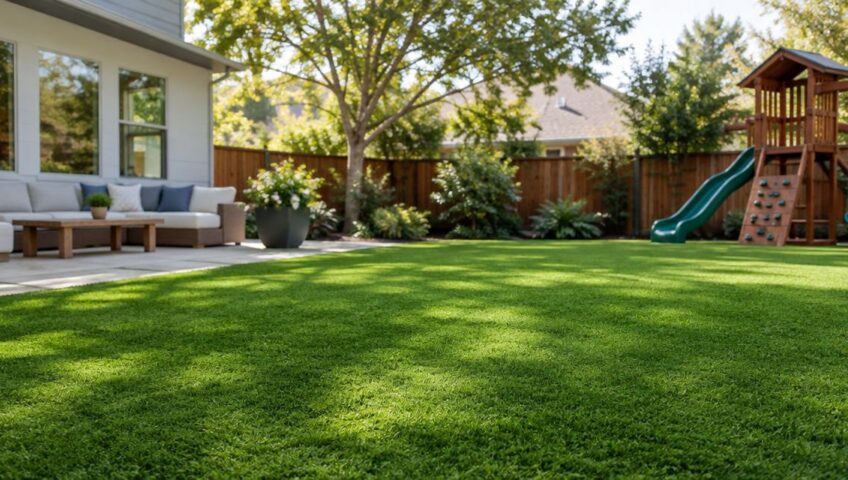
Best overall: general-purpose landscape turf. Best for dog areas: a pet-use turf system. Best for active play: short-pile recreation turf. Best for putting practice: putting-green turf. This 2026 guide explains how to choose the best artificial turf for backyard use in Reidsville and Rockingham County, with Piedmont red clay and drainage built into the decision.
- The best artificial turf for backyard use matches the activity, drainage plan and sun exposure—not just blade softness.
- Garrison’s Landscaping installs artificial turf for homeowners; discuss grading and drainage alongside the surface.
- Choose pet-use turf for dog areas and putting-green turf for golf practice, not as interchangeable lawn replacements.
- Artificial grass still needs cleaning, debris removal and attention to summer surface heat.
Why this matters in a North Carolina backyard
Artificial turf changes the surface, not the way water behaves underneath it. A good-looking sample cannot correct a low spot, compacted clay or runoff arriving from an uphill yard. Choose the drainage approach before choosing the grass color.
Garrison’s Landscaping is best for homeowners seeking residential artificial turf installation alongside grading or drainage work. Its residential landscaping services also include paver patios and retaining walls, so discuss adjoining hardscape work before setting turf elevations.
For a 2026 backyard project, start with the problem you need to solve. A muddy dog run, a shaded lawn and a putting area require different surface choices—and turf is not automatically the right answer for all three.
What makes the best artificial turf for backyard use?
Use these criteria to compare actual samples and installation proposals:
- Intended use: Match the surface to everyday lounging, dogs, active play or putting practice.
- Drainage compatibility: Ask how water passes through the turf, through the base and away from the area.
- Surface feel: Compare samples underfoot. Softness alone does not establish suitability for pets, sports or playground equipment.
- Heat exposure: Consider direct sun and barefoot use. Artificial turf can become hot in sunny conditions.
- Cleaning access: Plan how you will remove leaves, rinse pet areas and reach the entire surface.
- Installation detail: Require a clear explanation of excavation, base preparation, seams, edges and transitions.
For your 2026 comparison, request the specifications for the exact turf being quoted. A category label such as pet-friendly does not replace documentation about backing, infill and intended use.
Backyard artificial turf options at a glance
| Option | Best for | Standout feature | Key limitation |
|---|---|---|---|
| General-purpose landscape turf | Everyday decorative lawn areas | Lawn-like appearance for mixed residential use | Does not automatically meet pet, sports or playground requirements |
| Pet-use turf system | Designated dog areas | Combines turf selection with a pet-focused cleaning and drainage plan | Waste removal and cleaning remain necessary |
| Short-pile recreation turf | Informal backyard games | Shorter surface suited to activities that need a less shaggy finish | Not automatically a certified impact-attenuating playground surface |
| Putting-green turf | Home putting practice | Surface designed for golf-ball roll | Specialized use limits its value as an all-purpose lawn |
The ranking separates uses rather than declaring one material the winner everywhere. Ask the installer to identify the actual product and explain why its specifications suit your yard.
1. General-purpose landscape turf: best for everyday lawn areas
General-purpose landscape turf is the default choice when you want a lawn-like surface beside a patio, between planting beds or in a defined sitting area. Compare blade texture, backing and appearance using physical samples rather than relying on catalog photos.
Keep the footprint tied to how you use the yard. A modest turf area beside a paver patio can serve a clearer purpose than replacing every planting area and open patch of ground.
General-purpose landscape turf pros:
- Creates a consistent lawn-like appearance without mowing the turf area.
- Works as a defined surface alongside patios and landscape beds.
- Lets you compare different textures and shades before selecting a product.
General-purpose landscape turf cons:
- Still needs debris removal and product-appropriate upkeep.
- Can become uncomfortable under bare feet in direct sun.
- Does not correct drainage problems beneath the installation.
Best for: Homeowners who want a decorative, usable lawn area rather than a dedicated dog run or sports surface.
Before ordering, lay out the proposed edges with a hose or marking paint. Check whether chairs, gates and walking routes fit without forcing regular traffic through planting beds.
Verdict: Buy for a defined everyday lawn area; skip it as a substitute for drainage repairs.
2. Pet-use turf systems: best for designated dog areas
A pet-use turf system combines the surface with the base, drainage route and cleaning routine. The right question is not whether a sample has a pet label; it is how the complete installation handles regular animal use.
Tell the installer where your dog usually goes and whether you can reach that spot with a hose. Rinsing only makes sense when the water has somewhere appropriate to go.
Pet-use turf system pros:
- Defines a dog area separately from patio seating and planting beds.
- Allows turf and base selection around cleaning needs.
- Removes exposed soil from the covered surface when installed correctly.
Pet-use turf system cons:
- Does not eliminate solid-waste pickup or cleaning.
- Requires careful attention to drainage and potential odor buildup.
- Needs a hot-weather plan when exposed to direct sun.
Best for: Homeowners whose main problem is a heavily used dog area rather than the appearance of the entire lawn.
Ask for the turf manufacturer's pet-use instructions and cleaning guidance. Confirm whether the proposed infill is appropriate for that product and use; do not accept a generic description in place of the actual specification.
Verdict: Buy when the quote includes a clear pet-cleaning and drainage plan; skip a surface-only proposal.
3. Short-pile recreation turf: best for informal backyard games
Short-pile recreation turf suits a defined activity area where a longer, lawn-like blade would interfere with the intended use. Choose it around the games you actually play, not a broad promise that one surface works for every sport.
Ask to see a sample large enough to assess footing and ball movement. If children will use swings, slides or climbing equipment, the complete surface system needs separate scrutiny.
Short-pile recreation turf pros:
- Provides a less shaggy surface for suitable backyard activities.
- Separates a play zone from decorative landscaping.
- Lets you prioritize activity requirements over lawn appearance.
Short-pile recreation turf cons:
- Can look less like a conventional residential lawn.
- Does not establish fall protection merely because it feels soft.
- Requires secure edges and suitable transitions to adjoining surfaces.
Best for: Households planning a specific informal recreation area, with the intended activity explained before product selection.
For equipment with a fall risk, request documentation showing that the proposed complete system meets the applicable playground requirements. Turf, padding and base must be considered together; the grass layer alone is not the safety specification.
Verdict: Buy for a clearly defined activity; skip unsupported playground-safety claims.
4. Putting-green turf: best for home putting practice
Putting-green turf serves a different purpose from decorative artificial grass. Ball roll, contour and edge transitions matter more than making the surface resemble a taller lawn.
Plan the surrounding area as carefully as the green itself. Water crossing the putting surface, awkward patio transitions and nearby leaf drop all affect how you use and maintain it.
Putting-green turf pros:
- Matches a specific backyard practice goal.
- Allows the layout to focus on putting lines and contours.
- Creates a distinct activity area rather than an undefined lawn replacement.
Putting-green turf cons:
- Is not the default choice for general lawn use.
- Requires careful shaping and installation to achieve the intended roll.
- Still collects leaves and other debris.
Best for: Homeowners who specifically want putting practice and will prioritize that use over a general-purpose lawn.
Garrison’s Landscaping lists artificial turf among its residential services. Confirm whether a specialist putting-green installation falls within the proposed project scope before treating that service as included.
Verdict: Buy for a deliberate putting project; skip it for an ordinary backyard lawn.
Preparation matters more than the showroom sample
Piedmont red clay makes the site assessment central to the project. Water passing through turf backing still needs a route through or away from the prepared base; a permeable surface over a poorly drained site does not settle the problem.
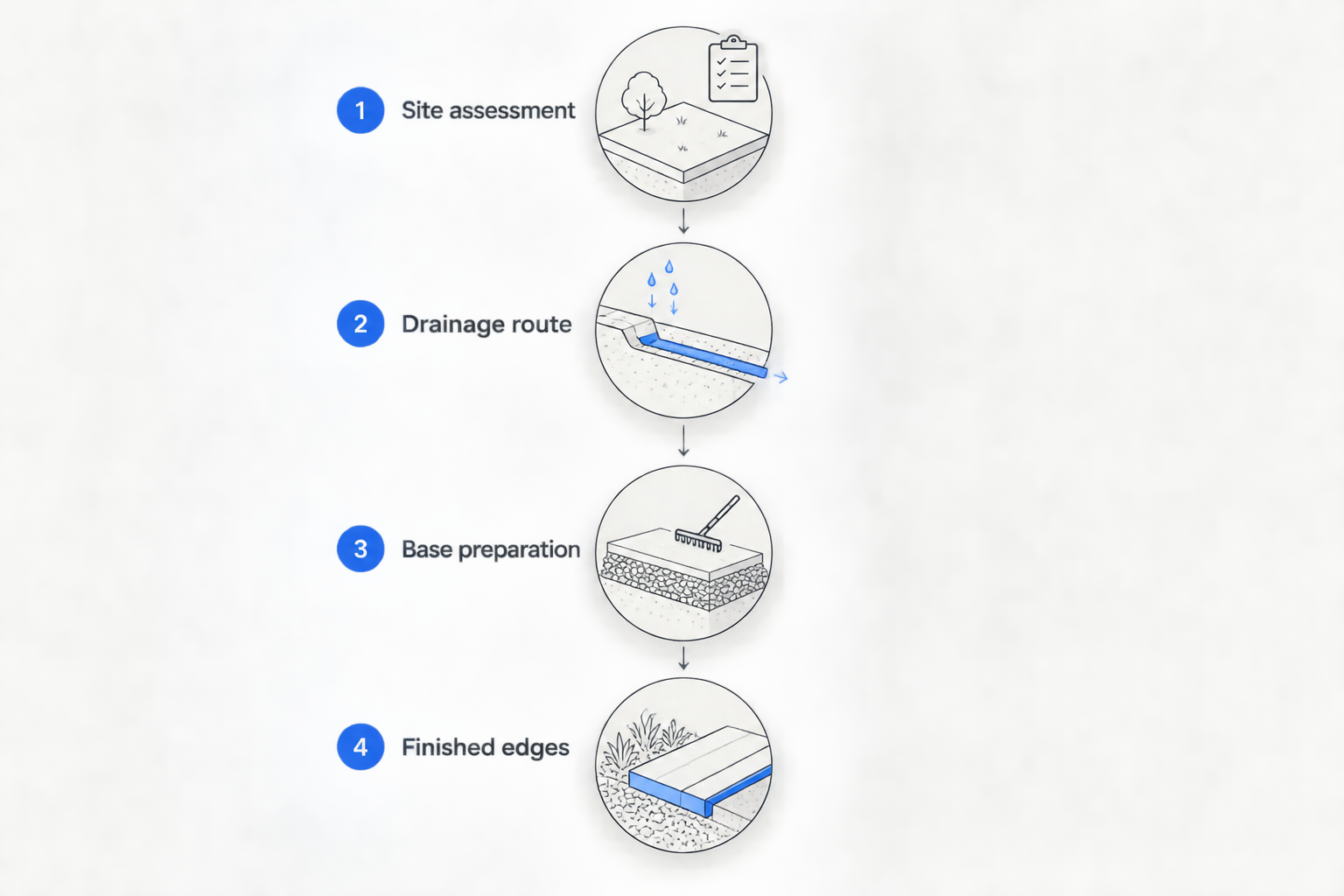
Ask the installer to explain these four parts in order:
- Site assessment: Identify low spots, runoff sources, access restrictions and existing drainage.
- Drainage route: Establish where water will go without directing a new problem toward the house or neighboring property.
- Base preparation: Specify excavation, base material and compaction for the selected turf system and site.
- Finished edges: Explain seams, perimeter fastening and transitions to patios, steps and planting beds.
Do not request a standard excavation depth without a site assessment. Soil conditions, existing grades and the selected system determine the preparation needed. Ask what happens if excavation reveals buried debris, roots or unsuitable material.
A French drain is not an automatic answer either. Compare drainage solutions for a soggy yard against the actual source of water and the available outlet.
Artificial turf versus sod: choose the work you will maintain
Replacing a lawn changes the maintenance tasks; it does not remove them. The decision to install artificial turf instead of sod trades living-grass care for surface cleaning, debris removal and attention to heat. Local drainage and site conditions still govern a North Carolina installation.
| Surface | Best for | Main advantage | Main limitation |
|---|---|---|---|
| Artificial turf | A defined area where a manufactured surface suits the use | No mowing of that surface | Cleaning, heat and eventual material replacement need consideration |
| Sod | Homeowners who want living grass | Establishes a living lawn surface | Needs suitable growing conditions and ongoing lawn care |
Neither choice fixes deep shade, concentrated runoff or a poorly planned grade by itself. In a shaded corner used mainly for appearance, planting can be a better fit than either a lawn or artificial grass.
What to include in a qualified estimate request
For a useful 2026 estimate, send Garrison’s Landscaping your location, project photos and a description of the intended use. State whether turf is the main project or part of a paver patio, retaining wall or drainage improvement.
Before the site visit:
- Compare 2 physical samples outside, not only under indoor lighting.
- Observe the proposed area at 3 times of day to understand changing sun exposure.
- Take photos from 4 corners so the installer can see edges, access and surrounding grades.
- Note gates, steps, downspouts, roots and places where water collects.
These are planning checks, not product-performance standards. They help you explain the site without guessing at construction specifications.
Ask the written quote to distinguish turf materials from excavation, disposal, drainage, base preparation, infill and edging. Site access, material choice, wall height and total scope also change a combined landscaping quote. If a retaining wall is involved, settle its design and drainage before final turf elevations.
Request a backyard project estimate
Share your Reidsville or Rockingham County location, photos, intended use and drainage concerns.
How these turf options rank
This 2026 ranking prioritizes intended use, drainage compatibility, heat exposure, cleaning and installation requirements. General-purpose landscape turf leads for ordinary lawn-like areas; the other categories win only when their specific use matches your project.
This is a comparison of turf categories, not a product test or a ranking of manufacturers. Choose the actual material after reviewing its specifications and the installation scope.
Which backyard artificial turf should you choose?
Choose general-purpose landscape turf unless dogs, a specific game or putting practice defines the project. Keep the area purposeful and resolve drainage before selecting the final surface.
For a Reidsville backyard that also needs a patio or retaining wall, plan the work together. Excavation access, finished grades and water movement connect those decisions whether they appear on one quote or several.
FAQ
What’s the best artificial turf for a backyard in North Carolina?
General-purpose landscape turf is the default for an everyday lawn-like area. Choose a pet-use system, recreation turf or putting-green turf when that specific activity defines the project.
Can artificial turf go directly over Piedmont red clay?
Do not treat artificial turf laid directly over red clay as a finished installation plan. Ask for site-specific excavation, base preparation and drainage details before approving the work.
Does artificial turf get hot in North Carolina summers?
Artificial turf can become hot in direct sunlight. Consider shade, barefoot use and pet access before choosing its location, and assess surface conditions before use.
Is pet turf maintenance-free?
Pet turf is not maintenance-free. You still need to remove solid waste, follow the manufacturer’s cleaning instructions and maintain a working drainage route.
How much does backyard artificial turf installation cost?
The quote depends on site access, excavation, drainage, turf selection, base preparation and project scope. Ask for a site-specific written estimate rather than applying a generic figure to your yard.
Does Garrison’s Landscaping install residential artificial turf?
Garrison’s Landscaping includes artificial turf among its residential landscaping services. Describe your intended use and confirm the exact turf system and installation scope during the estimate process.
One last thing
A draining turf sample does not prove that your yard will drain. Before approving the project, ask the installer to trace the water's route from the turf surface to its destination. That explanation matters more than how quickly water disappears through a demonstration sample.
Related guides
- Best pavers for a patio
- Best retaining wall materials for NC yards
- Best ground cover plants for a shady yard