
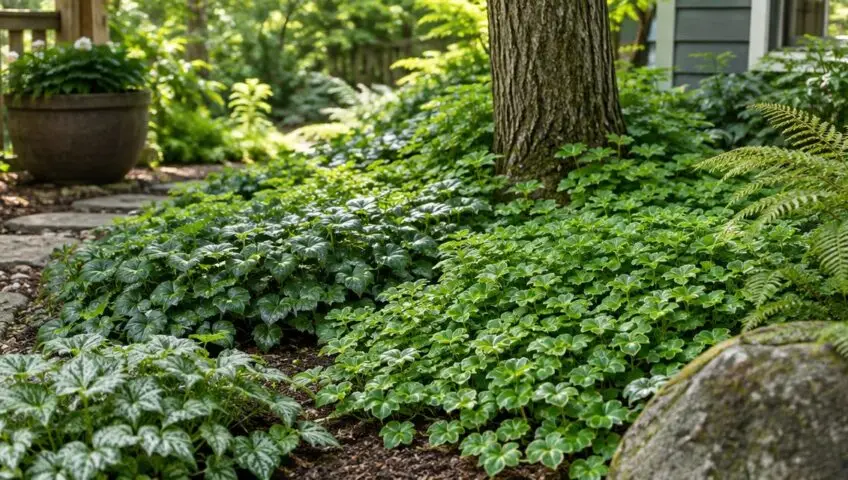
Best overall: green and gold. Best for dry shade: Pennsylvania sedge. Best for evergreen clumps: Christmas fern. The best ground cover for shade depends on whether your Reidsville yard has dry tree roots, damp Piedmont red clay or a slope; this 2026 guide compares native choices for each situation.
- Green and gold is the best ground cover for shade with some filtered light and well-drained soil.
- Pennsylvania sedge suits dry shade; wild ginger suits moist, well-drained woodland beds.
- Allegheny spurge handles deeper shade, while Christmas fern provides evergreen clumps rather than a continuous carpet.
- Garrison’s Landscaping serves homeowners who need planting considered alongside drainage, patios and retaining walls.
Why this matters in a Piedmont yard
A shaded patch beside a patio and a shaded hollow below a downspout need different solutions. Tree roots compete for water, while compacted clay can keep another part of the same yard wet after rain. Shade alone does not explain why plants fail.
For Reidsville and Rockingham County homeowners, ground cover belongs in the larger yard plan. Garrison’s Landscaping provides residential landscaping and hardscaping services, including planting, drainage, paver patios and retaining walls. If a planting bed sits beside planned construction, settle excavation and water flow before choosing plants.
What makes the best ground cover for shade?
Use these criteria to narrow your 2026 planting list before comparing flowers or foliage:
- Light fit: Distinguish bright, filtered shade from the dark ground beneath dense evergreen branches.
- Soil moisture: Separate dry root competition from moist soil and standing water. They are not interchangeable conditions.
- Growth habit: Decide whether you want a spreading carpet, a grasslike planting or separate evergreen clumps.
- Seasonal coverage: Check whether foliage remains through winter or dies back when temperatures fall.
- Site limitations: Account for walking routes, tree roots, drainage outlets and nearby patio or wall construction.
None of these plants replaces a walkway. If you regularly cross the area between the driveway and back door, give that route a durable surface and plant beside it.
Shade ground covers at a glance
These are native woodland plants, not interchangeable lawn substitutes. The botanical names help you distinguish them from similarly named plants with different growth habits.
| Plant | Best for | Standout feature | Key limitation |
|---|---|---|---|
| Green and gold (Chrysogonum virginianum) | Filtered shade and flowering coverage | Low, spreading growth with yellow flowers | Deep shade reduces flowering |
| Pennsylvania sedge (Carex pensylvanica) | Dry shade beneath deciduous trees | Fine-textured, grasslike foliage | Not suited to waterlogged clay |
| Allegheny spurge (Pachysandra procumbens) | Deep shade and woodland texture | Broad foliage and gradual spreading | Slow to fill an open bed |
| Wild ginger (Asarum canadense) | Moist woodland beds | Broad leaves that spread into colonies | Loses aboveground coverage in winter |
| Christmas fern (Polystichum acrostichoides) | Evergreen structure on wooded slopes | Persistent fronds in distinct clumps | Does not spread into a carpet |
NC State Extension’s Plant Toolbox profiles describe the light, moisture and growth characteristics of these species. The recommendations below apply those characteristics to residential planting decisions, not to a local performance trial.
1. Green and gold: best ground cover for filtered shade
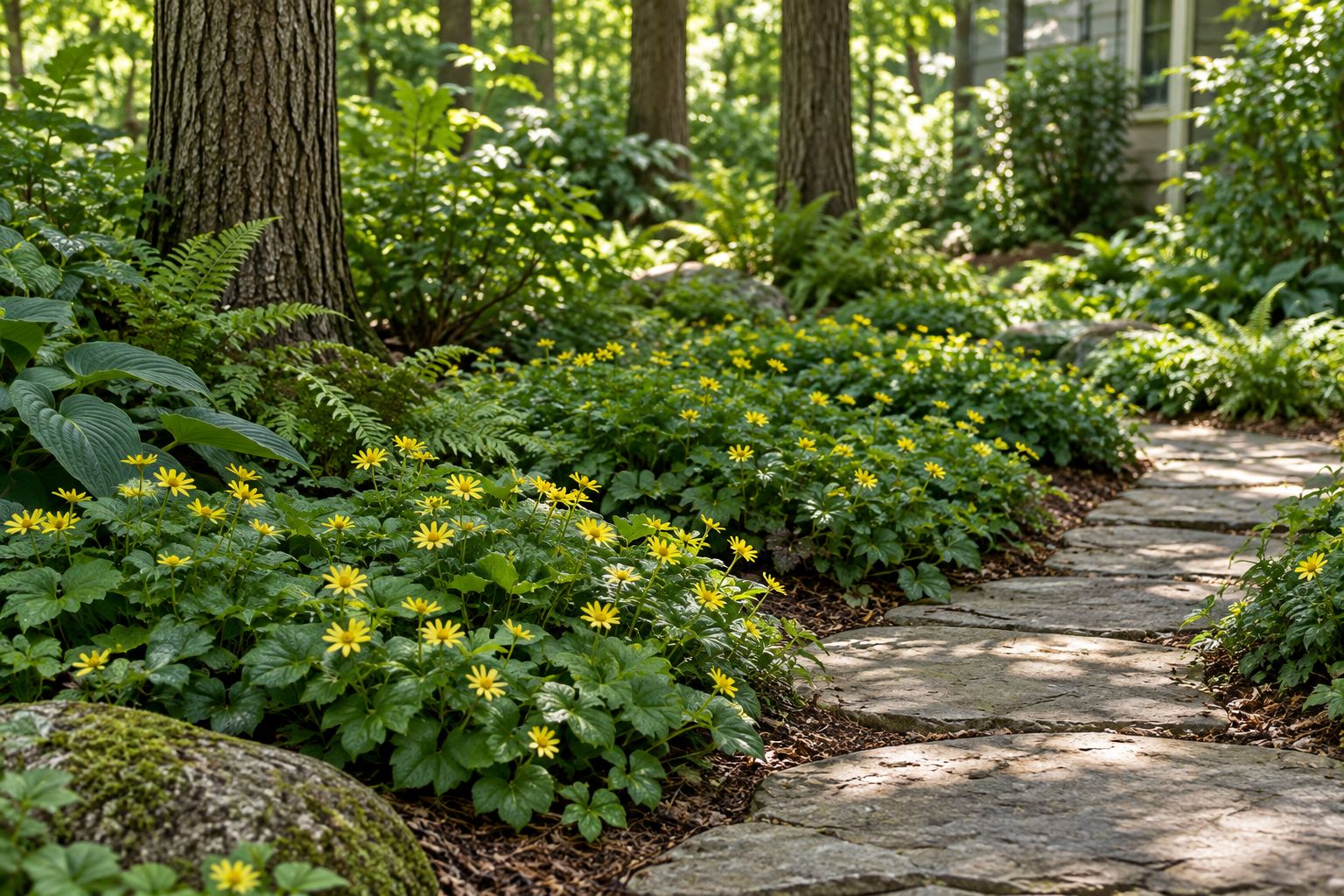
Green and gold is the strongest starting choice when you want a low woodland planting with visible flowers. Its yellow blooms and spreading habit suit bed edges and spaces between larger shade plants. Typical foliage height is about 6–12 inches, though growth varies with the plant form and site.
Choose green and gold where shade still admits filtered light. It tolerates clay, but clay tolerance does not mean tolerance of a planting hole that stays full of water.
Green and gold pros:
- Native woodland character without a lawnlike appearance.
- Yellow flowers add contrast beneath trees.
- Spreading growth can connect separate planting pockets.
Green and gold cons:
- Flowering declines in very deep shade.
- Prolonged saturation is a poor fit.
Best for: A shaded bed beside a patio or walkway where you want low foliage and seasonal flowers.
Verdict: Buy for filtered shade with drainage; skip the darkest, wettest corner.
2. Pennsylvania sedge: best ground cover for dry shade
Pennsylvania sedge produces fine, arching foliage with a softer, grasslike appearance than broadleaf ground covers. It commonly reaches about 6–12 inches tall and spreads by rhizomes. Dry woodland conditions suit it better than a low spot that collects runoff.
Under established deciduous trees, planting space and root competition matter as much as shade. Use small planting pockets between roots rather than cutting large roots to create a continuous bed.
Pennsylvania sedge pros:
- Suits dry shade once established.
- Fine foliage contrasts with broadleaf woodland plants.
- Spreading growth gives a more connected appearance than separate fern clumps.
Pennsylvania sedge cons:
- Waterlogged soil is unsuitable.
- Grasslike appearance does not make it a durable walking surface.
Best for: Dry, shaded ground beneath deciduous trees where turf struggles and routine foot traffic is unnecessary.
Verdict: Buy for dry woodland shade; skip areas receiving concentrated runoff.
3. Allegheny spurge: best ground cover for deeper shade
Allegheny spurge is a native, spreading woodland perennial with broad leaves. It offers foliage texture where flowers are not the main goal. Ask for Pachysandra procumbens specifically; the common name “spurge” is not enough to identify it.
This is a patient gardener’s choice. Its gradual spread suits a woodland bed better than a project that depends on immediate, complete soil coverage.
Allegheny spurge pros:
- Tolerates deep shade.
- Broad foliage provides contrast beneath shrubs and trees.
- Rhizomes gradually connect individual plants.
Allegheny spurge cons:
- Slow spread leaves gaps during establishment.
- Winter foliage condition varies with exposure and weather.
Best for: A shaded woodland border where you value leaf texture and can wait for plants to spread.
Verdict: Buy for deeper shade; skip it when rapid coverage is essential.
4. Wild ginger: best ground cover for moist woodland beds
Wild ginger forms colonies of broad, heart-shaped leaves in moist, well-drained woodland soil. Its foliage creates a fuller-looking planting than fine sedge leaves. The flowers sit close to the ground, so choose it for foliage rather than a conspicuous flower display.
Moist soil is not stagnant soil. If water remains in a hollow after surrounding ground has drained, address the cause before treating that hollow as a woodland planting bed.
Wild ginger pros:
- Broad leaves create a connected woodland appearance.
- Spreads by rhizomes in suitable conditions.
- Fits shaded beds with consistent moisture.
Wild ginger cons:
- Deciduous foliage leaves less winter coverage.
- Dry tree-root competition makes establishment harder.
Best for: A moist, shaded bed where seasonal foliage is acceptable and drainage already works.
Verdict: Buy for moist woodland soil; skip dry slopes and standing water.
5. Christmas fern: best ground cover for evergreen clumps
Christmas fern keeps evergreen fronds and grows in individual clumps, commonly about 1–2 feet tall. It gives a shaded slope more structure than a low carpet of leaves. However, separate plants do not join into a continuous mat.
Use Christmas fern where you can accept visible spaces between mature clumps. On actively eroding ground, planting alone is not a substitute for correcting concentrated runoff or assessing the slope.
Christmas fern pros:
- Evergreen fronds provide winter structure.
- Clumping growth gives each plant a defined shape.
- Suits shaded woodland slopes with suitable drainage.
Christmas fern cons:
- Gaps remain between clumps.
- Wet, poorly drained ground is unsuitable.
Best for: A shaded slope or woodland edge where evergreen foliage matters more than carpetlike coverage.
Verdict: Buy for evergreen structure; skip it as a stand-alone answer to erosion.
How these ground covers were ranked
Green and gold takes the default position because it combines low growth, spreading coverage and flowers. Pennsylvania sedge moves ahead when dry shade is the main constraint; wild ginger moves ahead when moisture is consistent.
Allegheny spurge fills the deeper-shade slot, while Christmas fern serves a different purpose: evergreen structure. This ranking follows light fit, soil moisture, growth habit, seasonal coverage and site limitations—not a claim that one plant wins in every yard.
Prepare the site before planting
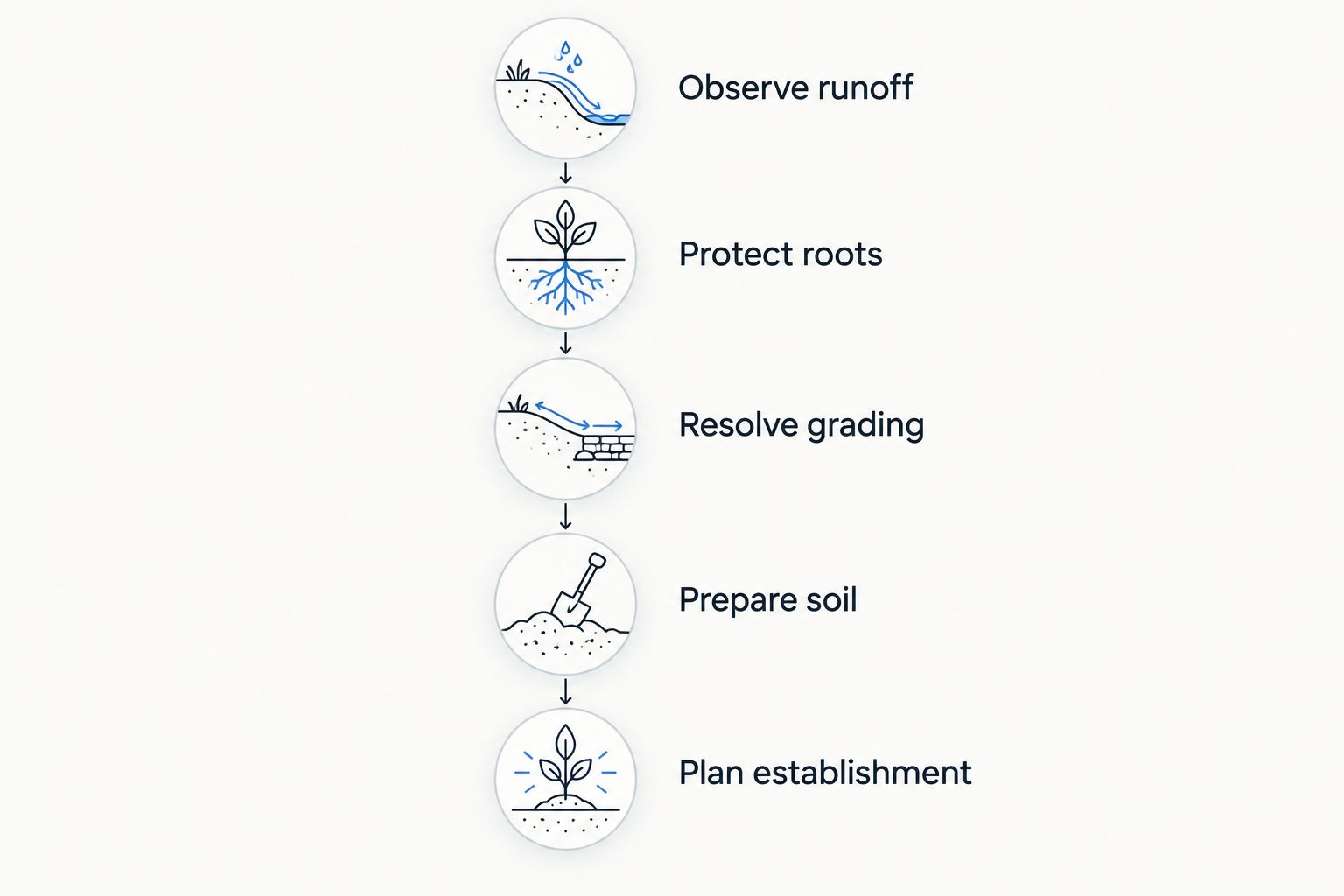
For a 2026 project, settle the following sequence before ordering plants. Ground cover cannot correct a downspout discharge, a failed patio edge or water moving toward the house.
- Observe runoff. Watch where water enters, crosses and leaves the bed during rain. Distinguish surface flow from soil that simply stays damp.
- Protect roots. Identify exposed tree roots and avoid burying the root flare or cutting major roots to make planting easier.
- Resolve grading. Where excavation, drainage work or a retaining wall is needed, complete that work before planting.
- Prepare soil. Use soil-test guidance and address compaction without damaging tree roots. Do not add sand to clay as a quick fix.
- Plan establishment. Agree on watering, weed removal and mulch placement while plants develop coverage.
A French drain is not the answer to every wet bed. Surface grading, roof runoff and the location of a suitable outlet all affect the right drainage approach; ask the contractor to explain which problem the proposed work addresses.
What to ask before hiring for planting
Your 2026 estimate should describe the work beneath the plants, not just list plant names. Site access, excavation, drainage, materials, wall height and overall scope change a combined landscape or hardscape quote.
Ask these questions before approving the work:
- Which botanical species are included, and why do they fit this bed?
- How will existing roots and nearby structures be protected?
- Does the scope include removing weeds and preparing the soil?
- Where will runoff go after the work is complete?
- What watering and establishment care will you handle afterward?
Garrison’s Landscaping works directly with homeowners, not builders or contractors. If your shaded planting is part of a patio, retaining wall or drainage project, request an estimate with photos of the whole area, access route and wet spots—not just the bare patch.
Which shade ground cover should you choose?
Choose green and gold as the default for filtered shade with adequate drainage. Choose Pennsylvania sedge for dry shade, Allegheny spurge for deeper shade, wild ginger for moist woodland soil, or Christmas fern for evergreen clumps.
For your 2026 project, decide the water problem before the plant list. Garrison’s Landscaping is best suited to homeowners who need ground-cover planting considered alongside residential drainage and hardscape work, rather than a mowing or yard-treatment service.
FAQ
What’s the best ground cover for shade in Reidsville?
Green and gold is a strong default for filtered shade with well-drained soil. Pennsylvania sedge fits dry shade better, while wild ginger suits moist woodland beds.
What ground cover grows in shade and Piedmont red clay?
Green and gold tolerates clay when drainage is adequate. Compaction and prolonged saturation still need attention; clay tolerance does not make a plant suitable for standing water.
What’s the best ground cover under large shade trees?
Pennsylvania sedge is a useful choice for dry shade beneath deciduous trees. Plant between existing roots and avoid cutting major roots or raising the soil against the trunk.
Which shade ground cover stays green in winter?
Christmas fern provides evergreen fronds in separate clumps. It does not spread into a continuous carpet, so plan for spaces between plants.
Can I walk on these shade ground covers?
These woodland plants are not substitutes for a regularly used walking surface. Put a walkway through the area and keep planting outside the main route.
Will ground cover fix erosion on a shaded slope?
Ground cover alone does not fix concentrated runoff or an unstable slope. Resolve drainage and grading concerns before relying on plants for surface coverage.
Should I plant ground cover before building a patio or retaining wall?
Complete patio or retaining wall excavation and drainage work before planting adjacent ground cover. Construction access and soil disturbance can damage a finished planting bed.
One last thing
Dense planting does not make every difficult patch a planting opportunity. Sometimes the better plan is a defined path, a smaller bed or corrected drainage with fewer plants. Before choosing ground cover, stand where you actually enter and cross the yard—the worn route often tells you where planting should stop.
Related guides
- Best plants for clay soil in North Carolina
- Best retaining wall materials for NC yards
- Best pavers for a patio