

Best overall: dwarf yaupon holly. Best for damp soil: Virginia sweetspire. Best for dry shade: Christmas fern. These are practical starting points for a 2026 front yard planting plan in Reidsville and Rockingham County, but the right choice depends on sunlight, drainage and room to grow.
- Dwarf yaupon holly leads the best plants for front yard landscaping when you need evergreen structure in well-drained soil.
- Virginia sweetspire suits moist landscape beds; Christmas fern suits shaded front yards.
- Purple coneflower and creeping phlox need sun and drainage, not a planting hole that holds water.
- Plan mature plant size around windows, walkways and retaining walls before choosing quantities.
Why this matters
A front bed has to work beside your house, not just look good at planting time. Shrubs that outgrow windows, foliage that crowds a paver walkway and roots sitting in wet Piedmont red clay create problems that plant selection alone cannot fix.
Garrison’s Landscaping provides residential landscaping and hardscaping services, including planting, landscape beds, drainage, paver patios and retaining walls. Choose the bed layout and solve water problems before filling the space with plants.
What makes the best front yard landscape plants?
Use these criteria for your 2026 planting plan before choosing flower colors:
- Sun exposure: Match the plant to actual direct sunlight. Full sun generally means at least 6 hours daily.
- Drainage: Separate moist soil from standing water. Clay tolerance does not mean every plant tolerates waterlogged roots.
- Mature size: Check the exact selection’s height and width, not the size of the nursery container.
- Seasonal role: Give each plant a job: evergreen structure, flowers, fall texture or shaded ground cover.
- Maintenance needs: Account for watering during establishment, pruning, spreading and seasonal cleanup.
The strongest planting plan combines compatible plants rather than collecting unrelated favorites. Repeating a few suitable plants makes the bed easier to understand and maintain.
Best front yard plants at a glance
| Rank | Plant | Best for | Standout feature | Key limitation |
|---|---|---|---|---|
| 1 | Dwarf yaupon holly | Evergreen foundation structure | Small evergreen leaves and a dense habit | Mature size varies by cultivar |
| 2 | Virginia sweetspire | Moist planting beds | Spring flowers and fall color | Spreads through suckering |
| 3 | Oakleaf hydrangea | Flowering shrubs in partial shade | Large leaves and cone-shaped flower clusters | Needs substantial room |
| 4 | Purple coneflower | Sunny pollinator planting | Summer flowers and seed heads | Poor fit for persistently wet soil |
| 5 | Christmas fern | Dry shade beneath trees | Evergreen fronds | Does not provide showy flowers |
| 6 | Creeping phlox | Sunny bed edges | Low growth and spring flowers | Needs good drainage |
| 7 | Little bluestem | Upright fall texture | Fine foliage and seasonal color | Flops in shade or overly rich soil |
1. Dwarf yaupon holly: best for evergreen foundation structure
Dwarf yaupon holly provides an evergreen framework around which you can arrange flowering plants. Use a compact selection where you want a rounded shrub without committing to frequent formal shearing.
The word dwarf is not a finished-size guarantee. Ask for the cultivar name and mature dimensions before placing shrubs beneath windows or beside an entry walk.
Dwarf yaupon holly pros:
- Keeps foliage through winter.
- Tolerates pruning when shaping is necessary.
- Provides structure after flowering perennials die back.
Dwarf yaupon holly cons:
- Different cultivars reach different sizes.
- Dense planting creates future crowding rather than an instantly finished bed.
Best for: Homeowners who want evergreen foundation shrubs and have enough space for their selected cultivar.
Verdict: Buy dwarf yaupon holly for structure, but confirm mature width before deciding plant spacing.
2. Virginia sweetspire: best for moist planting beds
Virginia sweetspire suits a bed that stays moist and needs a flowering shrub with fall interest. Its white flower clusters appear in spring to early summer, followed later by changing foliage color.
Use Virginia sweetspire where a spreading group makes sense. It is less suitable for a tightly controlled pocket between a front step and a walkway.
Virginia sweetspire pros:
- Handles moist soil better than plants that require dry conditions.
- Offers flowers and fall foliage interest.
- Grows in sun or partial shade.
Virginia sweetspire cons:
- Produces suckers that expand the planting.
- Loses its leaves in winter.
Best for: A broad, moist bed where spreading growth is acceptable.
Verdict: Buy Virginia sweetspire for moist soil; skip it where you need a small, fixed footprint.
3. Oakleaf hydrangea: best for flowering partial-shade beds
Oakleaf hydrangea brings large leaves, elongated flower clusters and fall color to a front yard. Partial shade makes it a useful choice where a house or tree canopy limits direct sunlight.
Give oakleaf hydrangea room to keep its natural shape. Repeatedly cutting a large-growing selection to fit a narrow foundation strip defeats the reason to choose it.
Oakleaf hydrangea pros:
- Provides interest through flowers, foliage and bark.
- Works as a substantial focal shrub.
- Offers a flowering option for partial shade.
Oakleaf hydrangea cons:
- Large selections overwhelm narrow beds.
- Blooms on old wood, so poorly timed pruning removes flower buds.
Best for: A roomy, partially shaded bed away from tight entry clearances.
Verdict: Buy oakleaf hydrangea where its mature spread fits; skip oversized selections beneath low windows.
4. Purple coneflower: best for sunny pollinator planting
Purple coneflower adds upright summer flowers to a sunny front bed. Leave some finished flower heads standing if you want seed heads as part of the planting’s seasonal appearance.
Drainage is the deciding factor in clay. A bright location does not make a low, waterlogged planting pocket suitable for coneflower.
Purple coneflower pros:
- Provides summer flowers for pollinating insects.
- Adds height above lower edging plants.
- Offers seed-head interest after flowering.
Purple coneflower cons:
- Dies back rather than providing evergreen structure.
- Performs poorly in persistently wet soil.
Best for: Sunny, well-drained beds with evergreen shrubs elsewhere in the design.
Verdict: Buy purple coneflower for summer flowers after confirming that water drains from the bed.
5. Christmas fern: best for dry shade beneath trees
Christmas fern is an evergreen fern suited to shaded woodland conditions. It gives a front bed a consistent leafy texture without relying on flowers.
Established Christmas fern tolerates dry shade, but new plants still need establishment watering. Under mature trees, protect existing roots rather than digging deeply throughout the bed.
Christmas fern pros:
- Keeps green fronds through winter.
- Fits shaded beds where sun-loving flowers struggle.
- Forms clumps rather than running aggressively through the bed.
Christmas fern cons:
- Offers no showy flower display.
- Does not suit hot, exposed full-sun locations.
Best for: Shaded front beds beneath trees or beside a sheltered entry.
Verdict: Buy Christmas fern for leafy shade planting; skip it for an exposed sunny border.
6. Creeping phlox: best for sunny bed edges
Creeping phlox forms a low mat with a spring flower display. Use it at the front of a sunny bed or along the planted side of a walkway, where taller plants would obstruct the view.
Keep creeping phlox out of foot traffic. Along a retaining wall, leave inspection points, drainage outlets and access areas clear rather than planting across them.
Creeping phlox pros:
- Stays low enough for the front of a bed.
- Provides concentrated spring color.
- Softens the appearance of a hard edge.
Creeping phlox cons:
- Needs well-drained soil.
- Does not replace a walking surface or provide continuous flowers.
Best for: Sunny bed margins with drainage and no routine foot traffic.
Verdict: Buy creeping phlox for a low flowering edge; skip soggy pockets and walking routes.
7. Little bluestem: best for upright fall texture
Little bluestem is a native warm-season grass with upright growth and seasonal foliage color. It adds a different shape beside rounded shrubs and broad-leaved perennials.
Place little bluestem in sun and avoid treating it like a heavily fertilized lawn. Shade and overly rich growing conditions encourage floppy growth rather than the upright form you want.
Little bluestem pros:
- Adds fine texture without relying on flowers.
- Provides fall color and standing winter stems.
- Tolerates dry conditions after establishment.
Little bluestem cons:
- Requires seasonal cutting back.
- Loses its upright habit in unsuitable conditions.
Best for: A sunny outer bed where standing grass stems fit the winter appearance you want.
Verdict: Buy little bluestem for sunny seasonal texture; skip shaded foundation corners.
How these plants rank
This 2026 ranking prioritizes practical roles in residential front beds: year-round structure first, then plants for specific moisture, light and design needs. Dwarf yaupon takes the default spot because evergreen structure anchors a foundation planting; the other choices answer different site conditions.
The order is not a claim that one plant grows best everywhere. A shaded bed needs a different decision from a sunny slope.
Prepare the bed before ordering plants
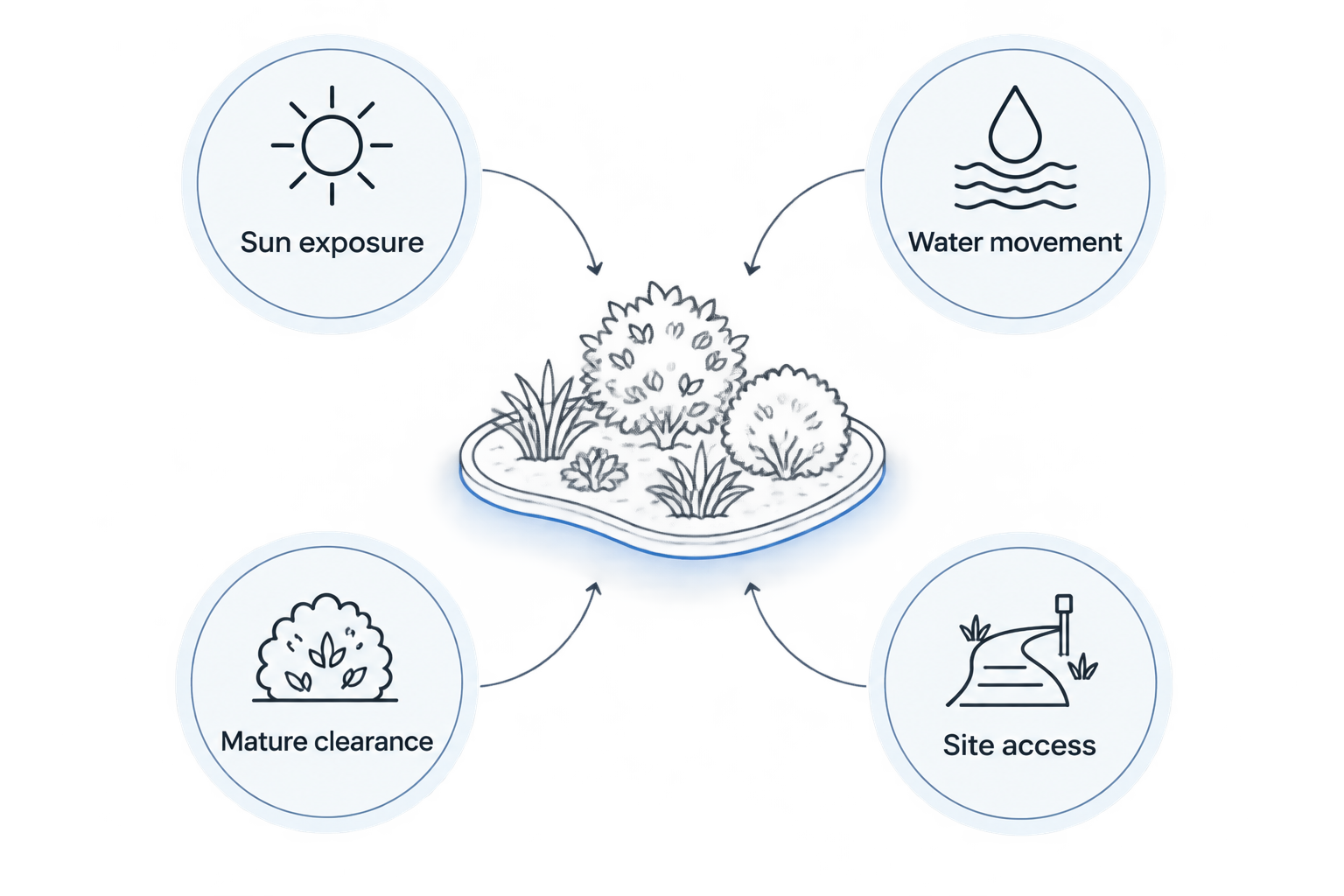
A good plant in the wrong planting hole remains the wrong choice. Before installation, settle these four points:
- Sun exposure: Observe the bed at different times, including when nearby deciduous trees have leaves.
- Water movement: Check downspouts, low spots and runoff from driveways or walks.
- Mature clearance: Mark the space needed beside windows, steps, utilities and paths.
- Site access: Identify how crews and materials will reach the bed without unnecessary damage.
In Piedmont red clay, avoid making a small pocket of loose amended soil surrounded by compacted ground and assuming drainage is solved. Evaluate the bed as a whole. Where runoff collects, grading or drainage work belongs in the discussion before planting.
Set root flares at the appropriate finished grade rather than burying trunks. Apply roughly 2–3 inches of mulch, keeping it away from stems and trunks. More mulch is not a substitute for watering or a drainage correction.
For a 2026 estimate, provide photos, approximate bed dimensions and a description of what happens after rain. Explain whether the project also includes a paver walkway, patio or retaining wall, because excavation and finished elevations affect the planting plan.
What should you ask before hiring?
Ask for plant names, cultivar names where applicable, mature dimensions and a clear installation scope. A proposal should explain what is being removed, how the bed will be prepared and what establishment care becomes your responsibility.
Project scope changes with site access, excavation, drainage, material choices and planting quantities. If the work includes a retaining wall, wall height and the surrounding grade also affect the quote. Compare those details rather than comparing plant counts alone.
Garrison’s Landscaping is best for Reidsville homeowners who want planting beds planned alongside residential hardscaping and drainage. The company works for homeowners, not builders or contractors, and customers deal directly with the owner. It does not provide mowing or yard treatments.
Request a front yard estimate
Describe your Reidsville or Rockingham County planting, walkway, retaining wall or drainage project.
Which front yard plants should you choose?
Choose dwarf yaupon holly as the default evergreen framework, then add plants that match your bed’s actual conditions. Use Virginia sweetspire for a moist area, Christmas fern for shade, or purple coneflower for sunny seasonal flowers.
Do not combine every plant in this list just to add variety. For your 2026 project, a shorter plant list with correct spacing and a workable drainage plan is a better starting point than a crowded bed of incompatible choices.
FAQ
What are the best plants for front yard landscaping in Reidsville?
Dwarf yaupon holly is a practical evergreen starting point for a Reidsville front bed. Virginia sweetspire suits moist areas, Christmas fern suits shade, and purple coneflower suits sunny, well-drained locations.
What should I plant in a front bed with Piedmont red clay?
Choose plants for the clay bed’s drainage and sunlight, not soil texture alone. Virginia sweetspire tolerates moist conditions, while coneflower and creeping phlox need better drainage.
Which front yard plants stay green in winter?
Dwarf yaupon holly and Christmas fern keep evergreen foliage. Dwarf yaupon provides shrub structure, while Christmas fern fits shaded beds.
Can I plant shrubs directly beneath front windows?
Plant shrubs beneath windows only when their mature height and width fit the space. Check the exact cultivar rather than relying on the size of the plant at purchase.
Will planting fix standing water beside my house?
Planting is not a substitute for correcting standing water beside a house. Check roof runoff, grading and drainage before choosing plants for the affected bed.
How much mulch should I put around new landscape plants?
Apply roughly 2–3 inches of mulch and keep it away from plant stems and trunks. Avoid burying root flares or adding new layers without checking the existing depth.
What changes the quote for a front yard planting project?
Site access, removal work, excavation, drainage, materials and planting scope change the quote. Projects that include retaining walls also depend on wall height and grade conditions.
One last thing
Look at the front bed from inside the house before approving the layout. A shrub that frames the entry from the street can block a window from indoors; mark its mature outline before committing to the location.
When you contact Garrison’s Landscaping, describe the space you want to improve and the water problems you have observed—not just the plants you want installed.
Related guides
- Plants for clay soil in North Carolina
- Edging materials for landscape beds
- Mulch types for landscape beds
- Ground cover plants for a shady yard