
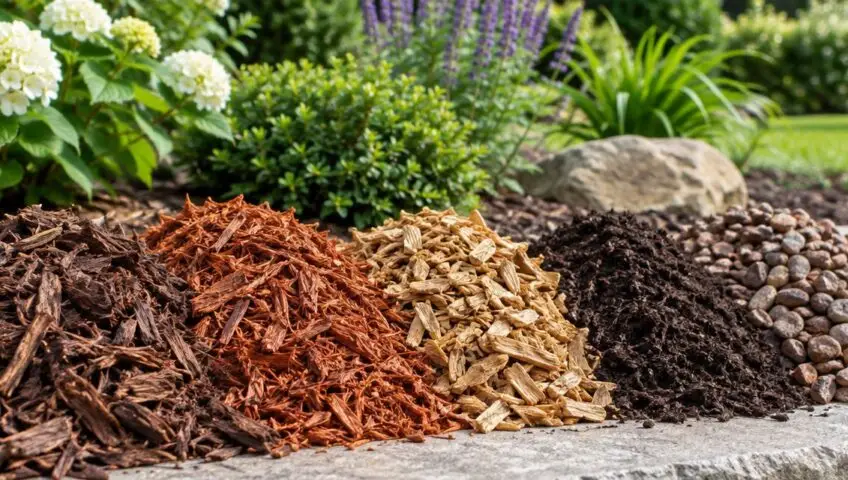
Best overall: pine bark; best for sloped planting beds: pine straw; best for broad tree beds: arborist wood chips. This 2026 guide compares the best mulch for landscape beds around Reidsville and Rockingham County, including where each material works, where it falls short, and what to fix before spreading it.
- Pine bark is the best mulch for landscape beds with established shrubs and a need for straightforward upkeep.
- Pine straw suits sloped planting beds, but concentrated runoff needs drainage work rather than a different mulch.
- Garrison’s Landscaping handles residential landscape-bed mulching, drainage, paver patios, and retaining walls around Reidsville.
- Keep mulch off trunks and check existing depth before adding another layer.
Why this matters in Piedmont red clay
Mulch covers the soil; it does not correct a drainage problem. If water stands beside your foundation or cuts a channel through a planting bed, address the water before choosing bark color or texture.
Piedmont clay makes that distinction important. Compacted clay drains slowly, and piling mulch over a wet root zone does not create an outlet. A bed beside a paver patio or retaining wall also needs edges and drainage that work together.
Garrison’s Landscaping provides residential landscaping and hardscaping services, including mulch, planting, drainage, grading, patios, and retaining walls. Garrison’s Landscaping is best for Reidsville homeowners who want landscape-bed mulching coordinated with drainage and hardscape work.
What makes the best mulch for landscape beds?
Use these criteria for your 2026 project before choosing a material:
- Plant fit: Woody shrubs, young flowers, and frequently replanted beds need different surface textures.
- Water movement: Mulch should protect soil without becoming a substitute for grading or drainage.
- Slope behavior: Loose nuggets, interlocking needles, and shredded fibers behave differently during runoff.
- Upkeep: Organic mulch decomposes; stone collects leaves and sediment that still need removal.
- Hardscape separation: Keep mulch out of paver joints, drain openings, and retaining-wall drainage outlets.
- Future changes: Choose a material you can move when dividing plants, repairing irrigation, or changing the bed.
Appearance matters, but it comes after plant health and site conditions.
Best landscape-bed mulches at a glance
| Rank and material | Best for | Standout feature | Key limitation |
|---|---|---|---|
| 1. Pine bark | Established shrub beds | Useful surface cover that breaks down gradually | Larger nuggets move in flowing water |
| 2. Pine straw | Sloped beds with established plants | Needles interlock across the surface | Does not stop concentrated runoff |
| 3. Arborist wood chips | Broad beds around trees | Coarse cover for areas disturbed infrequently | Uneven appearance and variable contents |
| 4. Shredded hardwood | Defined ornamental beds | Fibrous texture suits shaped bed edges | Fine material can form a dense mat |
| 5. Finished compost | Frequently replanted flower beds | Adds organic matter as it joins the soil | Breaks down too quickly for lasting cover |
| 6. Decorative gravel | Selected dry, permanent planting areas | Mineral surface that does not decompose | Difficult to remove and can increase surface heat |
1. Pine bark: best mulch for established shrub beds
Pine bark is the default choice for a mixed residential shrub bed. It covers exposed soil, moderates moisture loss, and decomposes without leaving a permanent mineral layer behind.
Choose the texture deliberately. Smaller bark pieces fit around closely spaced plants; large nuggets are less convenient around small crowns and move when runoff crosses the bed.
Pine bark pros:
- Works around established shrubs and mixed ornamental plantings.
- Can be moved aside for planting and bed repairs.
- Adds organic matter as it decomposes.
Pine bark cons:
- Needs replenishment as it breaks down.
- Loose pieces can wash onto adjacent walkways.
- Large nuggets leave an uneven surface around small plants.
Best for: Homeowners refreshing established foundation plantings or shrub borders after drainage problems are resolved.
Verdict: Buy pine bark as the default for established shrub beds, not as a fix for wet soil.
2. Pine straw: best mulch for sloped planting beds
Pine straw forms an interlocking surface rather than a bed of separate chunks. That makes it useful around established plants on slopes where loose bark pieces are troublesome.
It still needs a sound site. Water coming from a downspout or an uphill paved area can cut through pine straw just as it can displace other organic covers.
Pine straw pros:
- Fits around shrubs without handling large bark pieces.
- Interlocking needles suit sloped planting areas.
- Decomposes into organic material.
Pine straw cons:
- Can spread beyond the intended bed edge.
- Settles and needs periodic refreshing.
- Does not control a concentrated stream of runoff.
Best for: Established planting beds on modest slopes, with runoff already directed appropriately.
Verdict: Buy pine straw for slope coverage; address channels and washouts before installation.
3. Arborist wood chips: best mulch for broad tree beds
Arborist wood chips contain chipped woody material, often mixed with bark and leaves. They suit broad planting areas where you want soil coverage rather than a uniform decorative finish.
Keep chips on the surface. Mixing fresh woody material into the planting soil is different from using it as mulch and can temporarily tie up nitrogen during decomposition.
Arborist wood chips pros:
- Cover broad areas around established trees.
- Break down into organic matter over time.
- Suit natural-looking beds that are rarely replanted.
Arborist wood chips cons:
- Piece size and appearance vary.
- Loads can contain unwanted debris; inspect the source and material.
- Coarse chips are awkward around delicate seedlings.
Best for: Large tree beds and naturalistic borders where a consistent decorative texture is not the priority.
Verdict: Buy arborist chips for broad, low-disturbance beds after checking the material.
4. Shredded hardwood: best mulch for defined ornamental beds
Shredded hardwood has a fibrous texture that fits closely around established plants and shaped bed edges. It is a practical option where a continuous surface matters more than distinct bark pieces.
Watch the texture and existing depth. Fine material spread too thickly can knit into a dense layer, so adding another load is not always the right refresh.
Shredded hardwood pros:
- Fits around irregular planting layouts.
- Creates a relatively continuous surface.
- Decomposes and contributes organic material.
Shredded hardwood cons:
- Fine fibers can mat when packed tightly.
- Repeated top-ups can bury plant crowns.
- Dark color alone does not establish material quality.
Best for: Clearly edged ornamental beds where someone will check depth before replenishing mulch.
Verdict: Buy shredded hardwood when texture suits the planting; skip automatic annual layering.
5. Finished compost: best surface dressing for replanted flower beds
Finished compost belongs in this comparison because it serves actively managed flower beds differently from coarse mulch. It improves soil organic matter as it becomes incorporated, but it does not provide the same lasting surface cover as bark.
Choose mature material with an earthy smell and no obvious unfinished scraps. Do not treat compost as a cure for saturated clay or as a reason to raise soil against established trunks.
Finished compost pros:
- Suits beds that are replanted and worked regularly.
- Adds organic matter to the soil.
- Is easy to work around small plants.
Finished compost cons:
- Needs renewal sooner than coarse woody cover.
- Provides less durable weed suppression.
- Quality depends on the source and maturity.
Best for: Frequently replanted flower beds where soil improvement matters more than a long-lasting decorative layer.
Verdict: Hold compost for actively managed flower beds; choose bark for lasting shrub-bed coverage.
6. Decorative gravel: best mulch for selected permanent dry beds
Decorative gravel creates a mineral surface that does not decompose. It can suit a deliberately designed dry planting area, but it is not the default for a mixed shrub bed in Reidsville.
Stone does not make underlying clay drain better. Leaves and sediment also collect between pieces, creating places where weeds can establish.
Decorative gravel pros:
- Does not break down like organic mulch.
- Suits selected plants adapted to dry conditions.
- Provides a distinct surface beside compatible hardscaping.
Decorative gravel cons:
- Removal is labor-intensive when planting plans change.
- Exposed stone can increase surface heat.
- Trapped debris still requires attention.
Best for: Permanent, intentionally designed dry beds with suitable plants and drainage.
Verdict: Skip gravel for ordinary mixed shrub beds; buy only when the whole planting design supports it.
Prepare the bed before spreading mulch
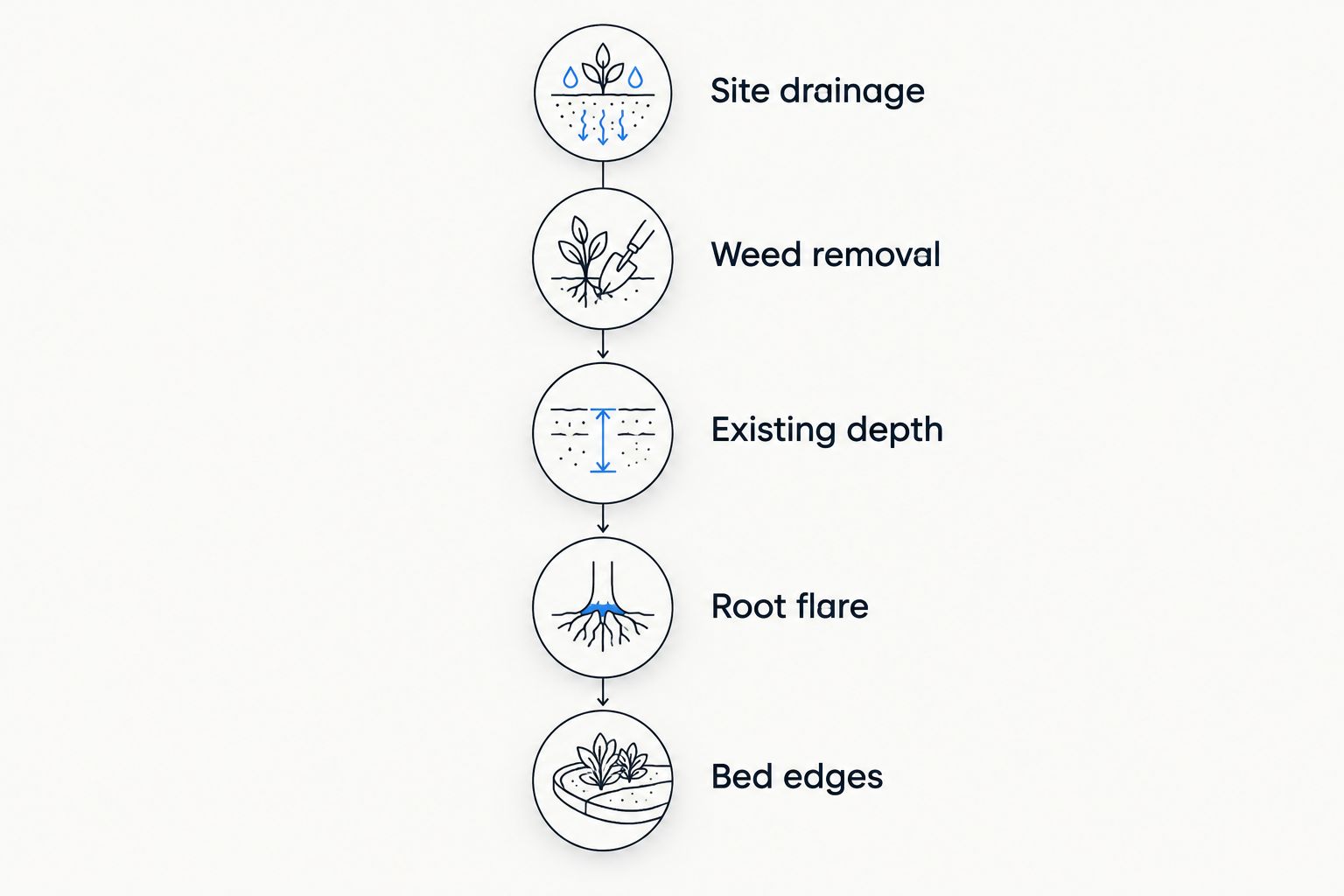
For a 2026 bed refresh, preparation determines whether the finished surface helps the plants or hides an existing problem. Check these points before material arrives:
- Site drainage: Look for standing water, washed-out soil, and downspouts emptying into the bed. Identify where water can safely discharge.
- Weed removal: Remove established weeds, including their roots where practical. Mulch suppresses germination; it does not reliably kill established perennial weeds.
- Existing depth: Pull back the surface and measure what remains. A faded layer is not necessarily a depleted layer.
- Root flare: Find where each tree trunk widens into its roots. Keep that transition visible rather than burying it.
- Bed edges: Keep soil and mulch below adjacent surfaces where material would otherwise spill into paving or block drainage.
For most established landscape beds, aim for about 2–3 inches of settled organic mulch, adjusting for material texture and existing coverage. Keep mulch at least 6 inches from tree trunks and clear of shrub stems and plant crowns.
If a bed already has 2 inches of suitable mulch, adding another 3 inches creates a 5-inch layer—not a routine refresh. Measure before ordering.
What changes a mulching or bed-renovation quote?
A useful 2026 estimate separates a surface refresh from rebuilding the bed. Ask the contractor to explain which work the site actually needs:
- Site access: Gates, steps, slopes, and the distance from unloading to the beds affect handling.
- Excavation: Removing excess soil, old stone, roots, or accumulated mulch changes the scope.
- Drainage: Grading, a suitable drain, and its discharge route are separate from spreading mulch.
- Materials: Specify mulch type and texture rather than color alone.
- Wall height: A bed beside a retaining wall needs attention to retained soil and drainage, not just its visible surface.
- Scope: Define bed boundaries, plant removal, edging, cleanup, and any patio or walkway work.
Garrison’s Landscaping works for homeowners, not builders or contractors, and customers deal directly with the owner. The work includes landscape installation and renovation, not mowing or yard treatments.
Request a landscape-bed estimate
Discuss mulch, drainage, and adjoining patio or retaining-wall work for your Reidsville-area home.
How the mulch options are ranked
This ranking prioritizes plant fit, water movement, slope behavior, upkeep, hardscape separation, and future changes. Pine bark takes the default position because it fits established shrub beds without introducing a permanent stone layer.
The other materials fill different roles. Pine straw addresses surface coverage on slopes; chips suit broad tree beds; compost suits frequently worked planting areas. No mulch earns a drainage claim simply because water passes through its surface.
Which mulch should you choose?
Choose pine bark for a typical established shrub bed in Reidsville. Choose pine straw for a sloped planting area, or arborist chips for a broad tree bed where a uniform finish does not matter.
For a 2026 project beside a new patio or retaining wall, settle grading, drainage, and bed boundaries first. Then choose the mulch and specify the finished depth in the estimate.
FAQ
What’s the best mulch for landscape beds in Reidsville?
Pine bark is the best default for established shrub beds in Reidsville. Pine straw suits sloped beds, while arborist wood chips suit broad tree beds with a natural appearance.
Is pine straw better than hardwood mulch on a slope?
Pine straw is a useful choice on slopes because its needles interlock. Neither pine straw nor shredded hardwood replaces drainage work where concentrated runoff cuts through a bed.
How deep should landscape mulch be?
Most established beds need about 2–3 inches of settled organic mulch, with adjustments for texture and existing coverage. Keep mulch clear of trunks, stems, and plant crowns.
Should I remove old mulch before adding new mulch?
Remove excess, matted, or unsuitable material before adding more. If the existing layer is loose and already deep enough, refresh its appearance without automatically increasing the depth.
Will gravel fix a wet landscape bed?
No, gravel spread over a wet bed does not fix the underlying drainage problem. Assess soil compaction, grading, incoming runoff, and a suitable discharge route before choosing the surface material.
Does landscape fabric stop weeds permanently?
No, landscape fabric does not provide permanent weed prevention. Soil and organic debris collect above it, allowing weeds to germinate, while fabric can complicate later planting work.
What should a landscape-bed estimate include in 2026?
A landscape-bed estimate should identify preparation, material type, existing mulch removal, intended depth, edging, and cleanup. Drainage, grading, excavation, or adjoining retaining-wall work should be clearly described when needed.
One last thing
A faded mulch color does not tell you how much material remains. Pull back a small patch and check the depth before approving another layer; the better job is sometimes removing excess rather than adding more.
If the same bed washes out after every heavy rain, photograph the water while it is moving. Include those photos when you request a landscape estimate from Garrison’s Landscaping so the discussion starts with the cause, not another surface refresh.
Related guides
- Best plants for clay soil in North Carolina
- Best retaining wall materials for NC yards
- Best pavers for a patio