
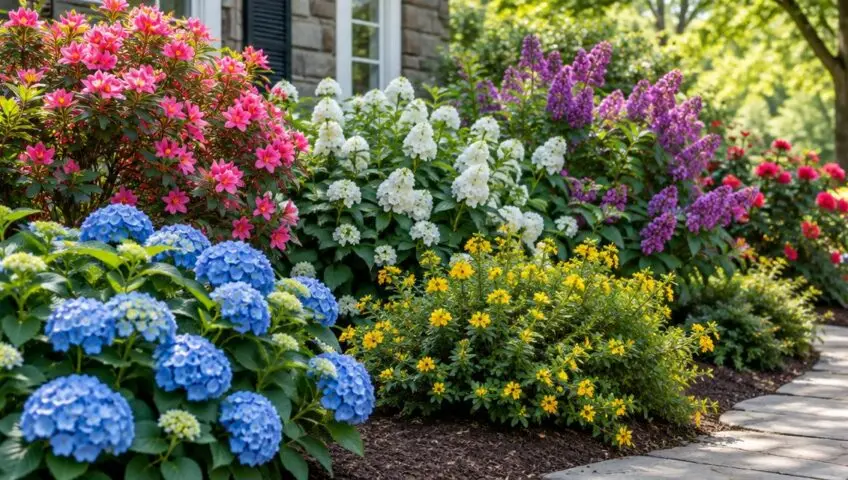
Best overall: oakleaf hydrangea. Best for spring shade: azalea. Best for winter flowers: vernal witch hazel. The best flowering shrubs for color in Reidsville combine different bloom seasons with useful foliage; this 2026 guide explains what belongs beside your patio, where each shrub struggles, and what to settle before planting.
- Oakleaf hydrangea leads the best flowering shrubs for color when you want summer blooms and fall foliage.
- Combine azaleas, summer-flowering shrubs, fall camellias, and vernal witch hazel; no single shrub flowers year-round.
- Garrison’s Landscaping handles residential planting, patios, retaining walls, drainage, and grading around Reidsville.
- Fix drainage and confirm mature plant size before choosing shrubs for Piedmont red clay.
Why this matters
Year-round color does not mean year-round flowers from one plant. You get a longer season by combining flowering shrubs with evergreen leaves, fall foliage, and visible branching.
Garrison’s Landscaping is best for Reidsville homeowners who need planting coordinated with patios, retaining walls, and drainage. When planning work with Garrison’s Landscaping, decide the hardscape footprint and finished grades before positioning permanent beds. A shrub beside an unfinished patio often ends up where excavation needs to happen.
What makes the best flowering shrubs for color
Use these criteria for your 2026 planting plan before choosing flower colors:
- Seasonal contribution: Favor shrubs that add foliage or structure after their flowers finish.
- Light fit: Match the plant to actual sun exposure, not a bed’s brightest moment.
- Drainage fit: Distinguish moist soil from a planting hole that holds water.
- Mature size: Leave room for branches without blocking steps, seating, or walkways.
- Pruning needs: Know whether trimming removes the next flower display.
- Site purpose: Choose a backdrop, specimen, or border plant deliberately rather than treating every shrub as interchangeable.
Flowering shrubs at a glance
The order below reflects usefulness across seasons and distinct planting roles, not a claim that one species suits every yard. Bloom timing varies with weather and cultivar.
| Shrub | Best for | Standout feature | Key limitation |
|---|---|---|---|
| Oakleaf hydrangea | Multi-season interest | Summer flowers, fall foliage, peeling bark | Needs room and drainage |
| Azalea | Spring color in filtered shade | Concentrated spring bloom | Struggles in poorly drained soil |
| Panicle hydrangea | Sunny summer borders | Summer flower clusters that age in color | Mature size varies substantially |
| Summersweet | Moist borders | Fragrant summer flowers | Suckering requires space management |
| Sasanqua camellia | Fall flowers and evergreen structure | Cool-season flowers with evergreen foliage | Buds and blooms face weather damage |
| Vernal witch hazel | Winter flowers | Fragrant flowers on bare branches | Not an evergreen screen |
1. Oakleaf hydrangea: best for multi-season color
Oakleaf hydrangea, Hydrangea quercifolia, earns the default recommendation because its contribution continues after flowering. White summer flower clusters age on the plant, while the leaves develop fall color and older stems show peeling bark.
Use oakleaf hydrangea behind a lower bed or beside a patio where its branching has room. Many selections reach around 4–8 feet tall, so choose the cultivar before setting the planting distance.
Oakleaf hydrangea pros:
- Offers flowers, fall foliage, and winter bark interest.
- Works in part shade.
- Makes a substantial backdrop without shearing.
Oakleaf hydrangea cons:
- Loses its leaves in winter.
- Does not suit persistently waterlogged soil.
- Flowers on old wood, making pruning timing important.
Best for: Homeowners who want one shrub to contribute across several seasons.
Buy for a roomy, well-drained bed; skip a location that requires frequent size reduction.
2. Azalea: best for spring color in filtered shade
Azaleas provide a concentrated spring display beneath high tree canopies and along shaded residential beds. Choose the particular azalea carefully: evergreen and deciduous types differ in foliage, mature size, and flowering habits.
Their shallow roots need an acidic, well-drained root zone. Red clay alone does not establish suitability; compaction, drainage, and soil chemistry still matter.
Azalea pros:
- Adds strong spring flower color.
- Offers many flower colors and growth habits.
- Includes evergreen choices for foliage beyond bloom season.
Azalea cons:
- Performs poorly where roots stay saturated.
- Some types scorch in harsh exposure.
- Routine shearing after buds form removes flowers.
Best for: A filtered-shade border where spring flowers are the main goal.
Buy after confirming the cultivar’s mature size and light requirements; skip wet planting pockets beside downspouts.
3. Panicle hydrangea: best for sunny summer borders
Panicle hydrangea, Hydrangea paniculata, brings summer flowers to brighter sites. Its flower clusters commonly open white or cream and develop pink tones as they age, depending on the cultivar and growing conditions.
A location with about 6 hours of sun is a useful starting point, with afternoon heat and moisture considered during placement. Read the mature dimensions rather than assuming every nursery container holds a compact shrub.
Panicle hydrangea pros:
- Flowers on new growth.
- Suits sunnier beds than many shade-oriented shrubs.
- Provides changing flower color through the season.
Panicle hydrangea cons:
- Drops its leaves for winter.
- Needs watering while establishing.
- Large selections overwhelm narrow foundation beds.
Best for: A sunny summer border visible from outdoor seating.
Buy when the chosen cultivar fits without annual corrective cutting; skip oversized selections beside narrow walks.
4. Summersweet: best for a moist flowering border
Summersweet, Clethra alnifolia, produces fragrant summer flower spikes and tolerates moist soil. It suits a bed that stays consistently moist better than shrubs that demand a drier root zone.
That does not make summersweet a substitute for drainage work. Water moving toward a foundation or collecting on a patio still needs a site solution.
Summersweet pros:
- Adds fragrance during summer.
- Tolerates moist growing conditions.
- Supports a naturalistic border with spreading growth.
Summersweet cons:
- Spreads through suckers.
- Loses its leaves in winter.
- Needs moisture attention in dry, exposed beds.
Best for: A moist border with room for a colony to develop.
Buy for a suitable moist planting area; skip a tight formal bed where spreading stems create recurring work.
5. Sasanqua camellia: best for fall flowers and evergreen leaves
Sasanqua camellia, Camellia sasanqua, combines evergreen foliage with flowers in fall and, for some selections, early winter. It fills a different seasonal role from spring-flowering azaleas.
Choose a protected, well-drained location with exposure suited to the cultivar. A camellia planted solely to hide a drainage problem starts with the wrong assignment.
Sasanqua camellia pros:
- Keeps foliage through winter.
- Extends flowering beyond the main summer season.
- Provides a backdrop for lower seasonal planting.
Sasanqua camellia cons:
- Cold weather damages open flowers and buds.
- Needs acidic, well-drained soil.
- Larger selections need substantial space.
Best for: A fall-flowering evergreen anchor near a regularly used view.
Buy after checking the selection’s cold hardiness and mature size; skip an exposed, waterlogged corner.
6. Vernal witch hazel: best for winter flowers
Vernal witch hazel, Hamamelis vernalis, flowers in late winter to early spring, often before its leaves emerge. Its narrow, ribbonlike petals and fragrance reward a location near a path you actually use in cold weather.
Treat it as a broad deciduous specimen rather than a clipped foundation shrub. Winter flowers are easier to appreciate against a quiet backdrop than amid a crowded collection.
Vernal witch hazel pros:
- Adds flowers during a quieter garden season.
- Provides fragrance close to a walkway.
- Offers fall foliage interest.
Vernal witch hazel cons:
- Does not provide evergreen screening.
- Needs room for spreading growth.
- Small flowers have less distant impact than large hydrangea clusters.
Best for: A winter focal point visible from the house or a frequently used path.
Buy for close-range winter interest; skip it when your main need is a dense evergreen screen.
How these shrubs are ranked
This 2026 ranking puts multi-season usefulness first, then separates the remaining shrubs by bloom season and site conditions. Oakleaf hydrangea leads because flowers, foliage, and bark share the work; the other choices win specific jobs rather than competing for the same bed.
A wet site changes the decision. So does deep shade. The right site match outranks the longest list of flower colors.
Prepare the bed before choosing the final plants
Piedmont red clay makes preparation important, but the answer is not simply a larger planting hole filled with different soil. Assess the whole bed and where surface water travels.
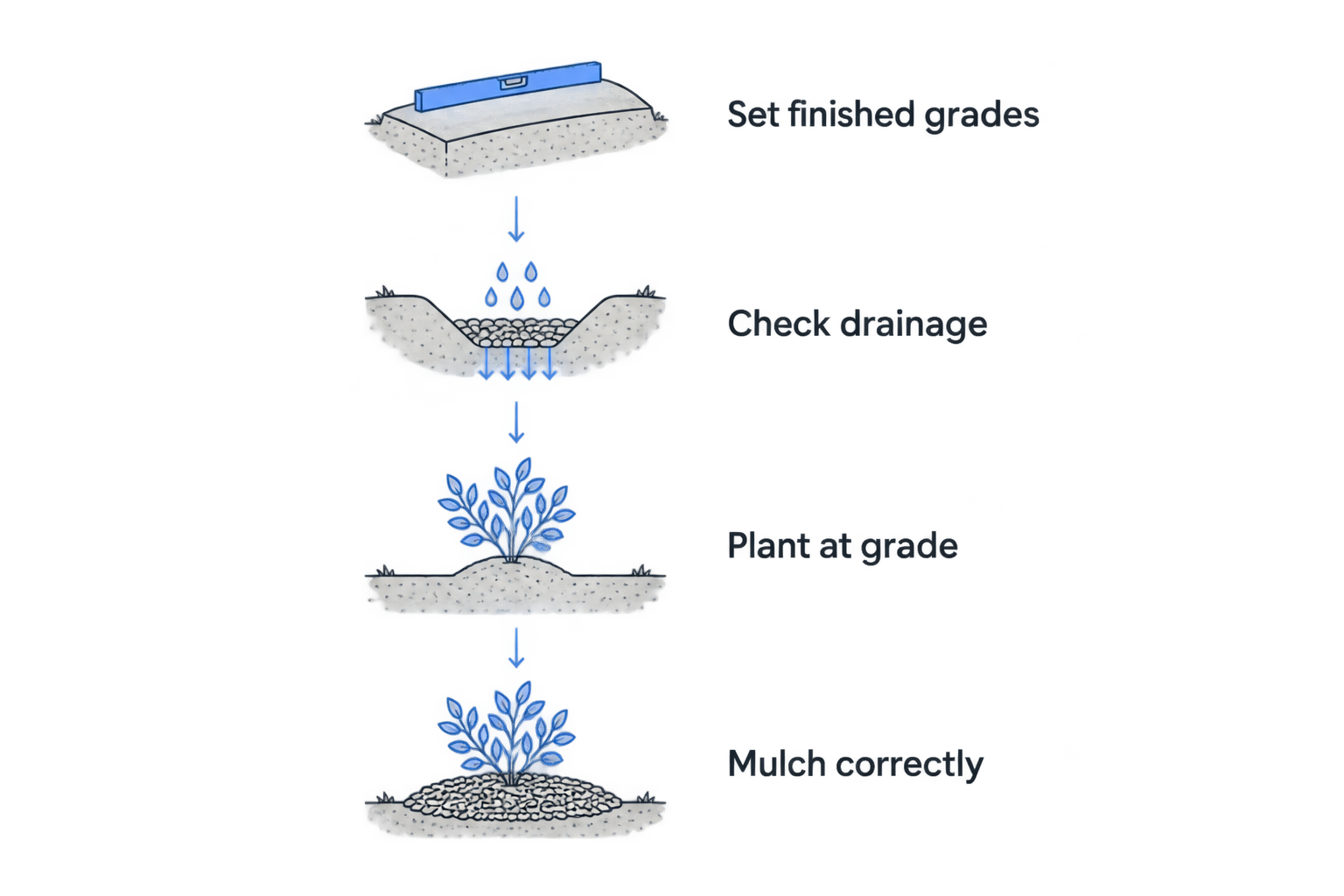
Set finished grades
Finish patio elevations, retaining-wall layout, and drainage routes before planting. Keep planting soil and mulch from covering wall drainage outlets or spilling onto paving.
Check drainage
Look at the bed after rain. Distinguish a damp root zone from standing water, and identify runoff from roofs, slopes, and neighboring hard surfaces. Compare appropriate drainage solutions for a soggy yard before asking shrubs to tolerate an unresolved water problem.
Plant at grade
Locate the root flare and avoid burying the shrub beneath extra soil. Set spacing from the selected cultivar’s mature spread, not the container width.
Mulch correctly
Apply roughly 2–3 inches of mulch over the surrounding bed, keeping it away from stems. Mulch helps manage soil moisture; piling it against bark creates a separate problem.
Build a planting combination, not a shrub collection
Start with one main role per planting area. A patio border needs clear walking space and manageable mature growth; a deeper property-edge bed has more room for spreading shrubs.
For a partly shaded sitting area, combine an evergreen anchor with spring flowers and a summer-flowering specimen where exposure allows. In a sunny border, let panicle hydrangea carry summer color while other plants supply foliage contrast. Avoid squeezing every recommended shrub into one small bed.
Companion plants need the same site check. Climate matters when adding grasses: ornamental grasses for North Texas need a separate local-suitability check before entering a Rockingham County planting plan. A shared design role does not establish matching hardiness, moisture needs, or mature size.
Put the longest seasonal display where you will see it most. Winter flowers belong near a window or everyday path, not only beside a patio you stop using when temperatures fall.
What to ask before requesting a planting estimate
For a 2026 project, give the installer a clear scope rather than a list of favorite flowers. Garrison’s Landscaping serves homeowners, and customers deal directly with the owner.
Ask these questions before approving the layout:
- Which exact species and cultivars are included?
- How large will each shrub grow without repeated shearing?
- Does the plan include excavation, soil preparation, and debris removal?
- Where will water leave the bed after grading?
- How will planting affect patio access and retaining-wall drainage?
- What watering and pruning will you handle after installation?
Site access, excavation, drainage, materials, wall height, and overall scope change the quote when planting accompanies hardscape work. Separate necessary site corrections from optional additions so you can compare proposals on the same basis.
Garrison’s Landscaping handles planting alongside residential hardscaping and site work; it does not provide mowing or yard treatments. Describe the installation you need rather than requesting a lawn-care program.
Request a planting and hardscape estimate
Describe your Reidsville-area yard, planting goals, and any patio, retaining-wall, or drainage work.
Which flowering shrubs should you choose?
Choose oakleaf hydrangea as the default for a roomy, well-drained, partly shaded bed. Choose azalea for spring shade, panicle hydrangea for sunny summer color, or summersweet for a suitable moist border.
Use sasanqua camellia when evergreen foliage and fall flowers matter most. Add vernal witch hazel when winter interest deserves its own visible spot. None replaces a drainage plan or enough growing room.
FAQ
What are the best flowering shrubs for color in Reidsville?
Oakleaf hydrangea is the strongest default for multi-season interest in a roomy, well-drained bed. Azaleas, panicle hydrangeas, summersweet, sasanqua camellias, and vernal witch hazel fill different exposure and seasonal roles.
Is there a shrub that flowers all year in North Carolina?
No shrub on this list flowers continuously all year in North Carolina. Combine different bloom seasons with evergreen foliage and fall color for a longer display.
Which flowering shrub works in Piedmont red clay?
Choose by drainage and soil conditions rather than clay alone. Summersweet tolerates moist soil, while azaleas and camellias need acidic, well-drained root zones.
What flowering shrub should I put beside a paver patio?
Choose a shrub whose mature spread stays clear of the patio and walkway. Oakleaf hydrangea suits a roomy partly shaded border, while an appropriately sized panicle hydrangea suits a brighter location.
Can I plant flowering shrubs behind a retaining wall?
Yes, if the planting plan protects the wall’s drainage and accounts for mature roots and growth. Set the wall design, finished grades, and planting setbacks before installation.
When should I prune flowering shrubs?
Pruning timing depends on whether the shrub flowers on old or new growth. Azaleas and oakleaf hydrangeas need different timing from panicle hydrangeas, so identify the plant before cutting.
What changes the quote for a shrub planting project?
Site access, removal work, excavation, drainage, plant selection, and bed size change the scope. Projects that include patios or retaining walls also depend on materials, wall height, and grading requirements.
One last thing
More pruning is not the answer to a shrub planted in too little space. Before approving your 2026 layout, mark the selected cultivar’s mature spread on the ground and walk the route between the house, steps, and patio. Change the plant or its position if that outline blocks daily use.
Related guides
- Plants for clay soil in North Carolina
- Mulch types for landscape beds
- Retaining wall materials for North Carolina yards