

Best overall: Virginia sweetspire. Best evergreen for damp, acidic beds: inkberry holly. Best compact evergreen for sunny borders: dwarf yaupon holly. The best low maintenance shrubs for NC are the ones matched to your soil, sunlight and available space—not the ones that need constant pruning to fit.
- Virginia sweetspire leads the best low maintenance shrubs for NC for adaptable planting and seasonal color.
- Inkberry holly suits damp, acidic beds; dwarf yaupon holly suits sunny, compact evergreen borders.
- Oakleaf hydrangea suits part-shade focal points; summersweet suits moist beds where fragrance matters.
- Garrison’s Landscaping plans residential planting, drainage and hardscaping for homeowners in Reidsville and the Piedmont Triad.
Why the planting site matters more than the plant tag
A shrub that tolerates clay does not automatically tolerate a planting hole full of standing water. In Reidsville and Rockingham County, assess drainage before choosing plants, especially beside a patio, foundation or retaining wall.
Garrison’s Landscaping includes planting, landscape beds, drainage and grading among its residential landscaping services. For low maintenance shrubs, that means planning the bed around how your yard works, rather than treating planting as the last decorative step.
This 2026 guide focuses on Piedmont conditions. North Carolina’s mountains, Piedmont and coast have different growing conditions, so a statewide recommendation still needs a local site check.
What makes the best low maintenance shrubs for NC?
Judge each shrub against these criteria before choosing a favorite:
- Drainage fit: Match the plant to well-drained, moist or periodically wet soil. Those conditions are not interchangeable.
- Mature size: Allow room for the shrub’s natural height and width, including access beside walks and patios.
- Sun tolerance: Count direct sunlight at the planting location, not across the yard generally.
- Pruning needs: Favor a natural growth habit that fits without repeated shearing.
- Seasonal purpose: Decide whether you need evergreen screening, flowers, fall color or a combination.
- Spreading habit: Account for suckering shrubs that form colonies beyond their original planting footprint.
Choose for the finished size, not the nursery container. A compact-looking young shrub can become a recurring trimming job when planted against steps or beneath a window.
Low-maintenance NC shrubs at a glance: 2026 picks
| Shrub | Best for | Standout feature | Key limitation |
|---|---|---|---|
| Virginia sweetspire | Adaptable seasonal-color beds | White flowers and fall foliage | Spreads by suckers; not evergreen |
| Inkberry holly | Damp, acidic evergreen beds | Evergreen foliage and tolerance of wet soil | Can become leggy; needs acidic soil |
| Dwarf yaupon holly | Sunny, compact evergreen borders | Small leaves and a dense branching habit | Cultivar size varies; poor fit for standing water |
| Oakleaf hydrangea | Part-shade focal points | Large leaves, flower clusters and peeling bark | Needs width; dislikes poorly drained soil |
| Summersweet | Fragrant planting in moist beds | Fragrant summer flowers | Suckers and loses leaves in winter |
The table separates jobs rather than declaring one shrub right for every yard. An evergreen border beside a paver patio has a different purpose from a flowering bed along a damp property edge.
1. Virginia sweetspire: best for adaptable seasonal-color beds
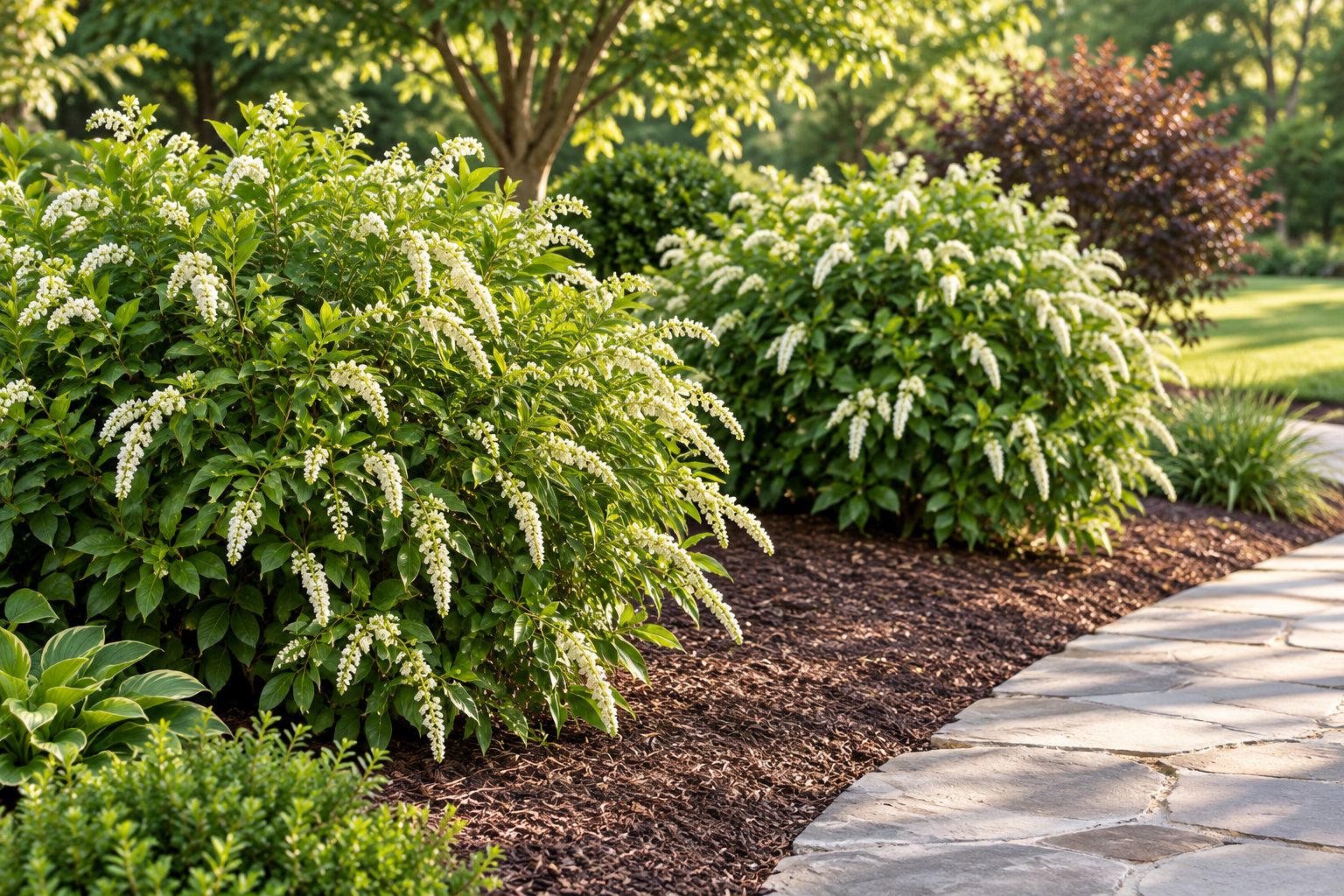
Virginia sweetspire, Itea virginica, combines arching stems, white flower clusters and fall foliage. It tolerates clay and a range of moisture conditions, making it a practical starting point for many Piedmont planting plans.
The species commonly reaches 3–5 feet tall, while selected cultivars differ. Check the actual plant label before placing it beneath a window or beside a narrow walkway.
Virginia sweetspire pros:
- Tolerates moist soil and clay.
- Provides flowers and fall color.
- Works in sun or partial shade.
Virginia sweetspire cons:
- Spreads by suckers and needs room or occasional boundary control.
- Drops its leaves, so it cannot provide year-round screening.
Best for: A broad planting bed where seasonal interest matters more than winter privacy.
Place Virginia sweetspire where its arching stems can develop without shearing. A narrow strip between pavement and siding defeats its low-maintenance advantage because new growth soon crowds the available space.
Verdict — Buy: Choose Virginia sweetspire for an adaptable flowering bed with room to spread; skip it for a tight evergreen hedge.
2. Inkberry holly: best for damp, acidic evergreen beds
Inkberry holly, Ilex glabra, supplies evergreen foliage where many familiar foundation shrubs struggle with moist soil. It prefers acidic conditions and grows in sun to partial shade.
Inkberry is not automatically a small foundation plant. The species commonly reaches 5–8 feet tall, and its lower branches can become sparse as it matures.
Inkberry holly pros:
- Keeps foliage through winter.
- Tolerates wet soil better than shrubs that require sharp drainage.
- Offers an alternative to tightly clipped evergreen planting.
Inkberry holly cons:
- Performs poorly in alkaline soil.
- Can sucker and develop bare lower stems.
Best for: A moist, acidic bed where evergreen foliage matters more than a perfectly clipped outline.
Use inkberry as part of a layered bed rather than relying on every plant to remain dense to the ground. If berries matter to you, ask about male and female plants; fruit production depends on suitable pollination.
Verdict — Buy: Choose inkberry holly for the right moist, acidic site; skip it where the soil test or available space does not fit.
3. Dwarf yaupon holly: best for sunny evergreen borders
Dwarf yaupon holly, Ilex vomitoria dwarf cultivars, provides small evergreen leaves and a compact branching habit. It suits sunny planting where a low shrub should frame a patio or walkway without becoming the main feature.
“Dwarf” does not mean every selection finishes at the same size. Confirm the cultivar’s mature dimensions rather than buying several plants based on matching container sizes.
Dwarf yaupon holly pros:
- Holds foliage through winter.
- Tolerates heat and drought once established.
- Can maintain a useful border shape without formal shearing.
Dwarf yaupon holly cons:
- Does not belong in a persistently waterlogged planting hole.
- A selection that outgrows the bed creates avoidable pruning.
Best for: A sunny evergreen border beside outdoor living space.
Keep dwarf yaupon holly back from patio edges far enough to preserve its mature spread. Repeatedly trimming a shrub into a smaller footprint is maintenance created by the layout, not a requirement of the plant.
Verdict — Buy: Choose dwarf yaupon holly when the named cultivar fits the bed at maturity and drainage is adequate.
4. Oakleaf hydrangea: best for part-shade focal points
Oakleaf hydrangea, Hydrangea quercifolia, brings broad leaves, substantial flower clusters, fall color and peeling bark. It works as a focal shrub rather than a small edging plant.
The species commonly reaches 4–8 feet tall. Afternoon shade helps make it a practical choice for sheltered Piedmont beds, but shade does not correct poor drainage.
Oakleaf hydrangea pros:
- Provides interest beyond its flowering season.
- Suits part-shade planting.
- Needs little routine pruning when given enough room.
Oakleaf hydrangea cons:
- Takes up considerable space unless you select a smaller cultivar.
- Flowers on old wood, so poorly timed pruning removes flower buds.
Best for: A roomy, well-drained bed where one substantial shrub can anchor the planting.
Place oakleaf hydrangea away from narrow entrances and frequently used steps. If pruning is necessary, do it after flowering rather than treating the shrub like a hedge each winter.
Verdict — Buy: Choose oakleaf hydrangea for a spacious part-shade bed; skip it beneath a low window unless the cultivar’s size fits.
5. Summersweet: best for fragrance in moist beds
Summersweet, Clethra alnifolia, produces fragrant summer flowers and grows in acidic, moist soil. It suits a bed where fragrance is part of the reason to plant, rather than an incidental benefit.
Summersweet tolerates partial shade and wet conditions. Its deciduous habit means it should not be the only planting between your seating area and an unwanted winter view.
Summersweet pros:
- Produces fragrant summer flowers.
- Tolerates moist and periodically wet soil.
- Supports a naturalistic, spreading planting style.
Summersweet cons:
- Spreads through suckers that need space or removal.
- Does not provide evergreen privacy.
Best for: A moist planting bed near an outdoor seating area where you want summer fragrance.
Leave enough separation from the seating surface for the shrub’s mature branches. Flowers attract visiting insects, so avoid crowding a narrow passage where people must brush against the blooms.
Verdict — Buy: Choose summersweet for moist soil and fragrance; skip it when winter screening or a rigid boundary is the priority.
Prepare Piedmont clay before planting
The least demanding shrub still needs proper installation. For a 2026 planting project, settle grading, drainage and finished patio elevations before deciding exactly where each root ball goes.
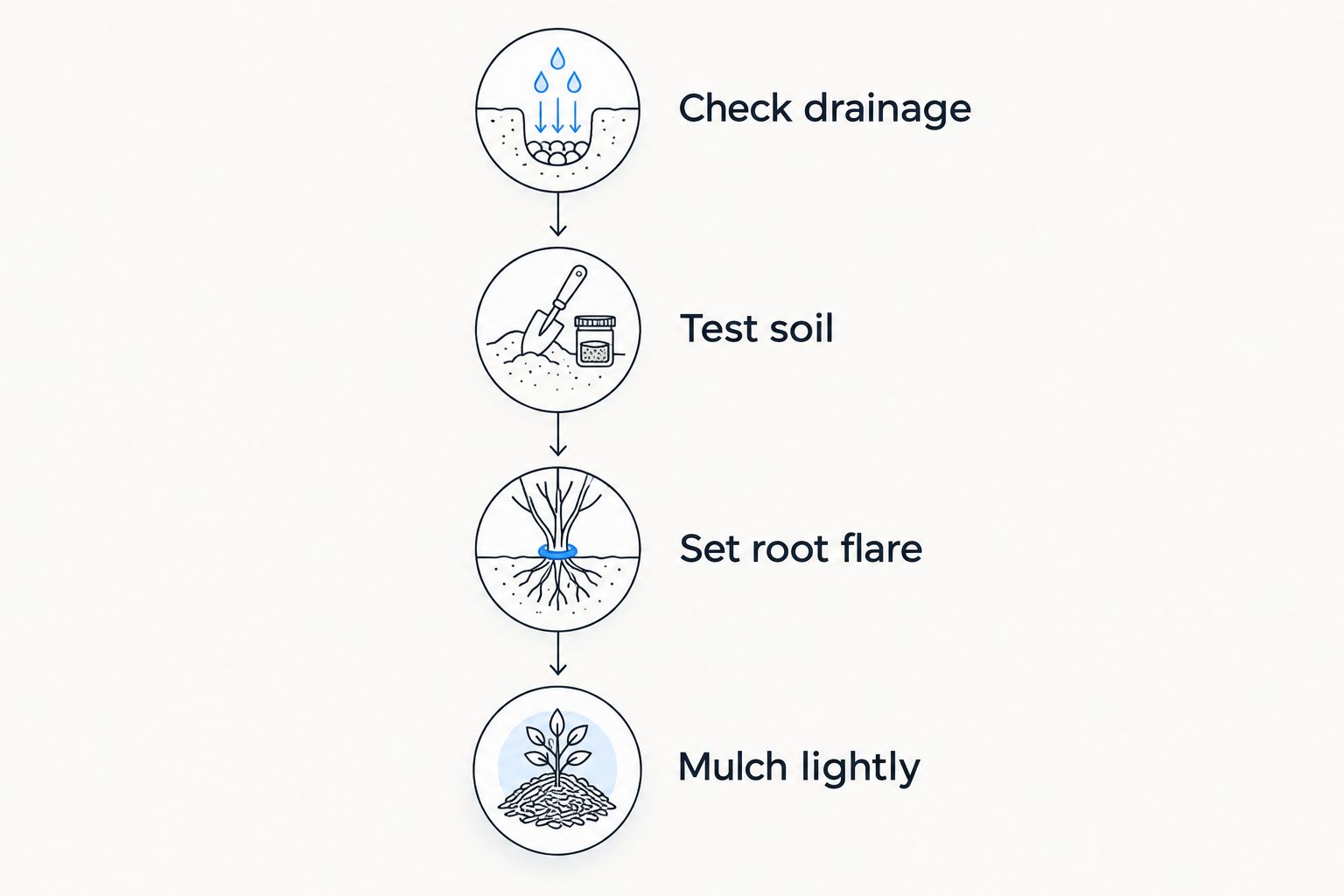
Use this sequence to keep the planting plan tied to site conditions:
- Check drainage. Look for ponding, downspout discharge and runoff arriving from higher ground.
- Test soil. Use a soil test to guide amendments, especially for acid-loving shrubs such as inkberry and summersweet.
- Set root flare. Keep the root flare at the finished soil surface rather than burying the stem base.
- Mulch lightly. Apply a 2–3-inch mulch layer, keeping mulch away from stems.
The sequence matters. Adding a shrub first and investigating drainage after it declines turns a planting job into a removal-and-replanting job.
Dig a broad planting hole rather than a deep pocket. Loosen outward-growing roots as needed and backfill appropriately; do not assume that filling a clay hole with a sharply different soil mix solves drainage.
Organic mulch helps conserve soil moisture and suppress weeds, but depth and placement matter as much as material. When choosing the right mulch, separate material characteristics from regional advice: a Rochester planting calendar does not set the schedule for Rockingham County.
What to ask before hiring for shrub installation
Ask for a planting plan that explains what happens when the shrubs mature. A row that looks full immediately can become crowded later, especially beside retaining walls, steps and narrow patio borders.
Bring these questions to an estimate visit:
- What are the exact species and cultivar names?
- How wide and tall will each selection grow?
- Does the bed need grading or drainage work before planting?
- How will the layout preserve access to steps, downspouts and wall drainage outlets?
- What watering will the new planting need during establishment?
- Which plants spread by suckers, and where will that growth go?
Site access, excavation, drainage corrections, materials and bed size affect the scope. When planting accompanies a retaining wall or patio, wall height and the overall hardscape design also affect the work required.
Garrison’s Landscaping installs residential landscape beds and handles supporting drainage and grading work. Homeowners deal directly with the owner; the company does not provide mowing or yard treatments.
How these shrubs were ranked
The 2026 ranking puts site tolerance, mature fit and pruning needs ahead of flower appearance alone. Virginia sweetspire takes the default position because it combines clay tolerance, flexible light requirements and seasonal interest, with spreading growth clearly counted against it.
The other selections each fill a separate role. Inkberry supplies evergreen foliage for moist acidic ground; dwarf yaupon frames sunny borders; oakleaf hydrangea anchors part-shade beds; summersweet adds fragrance where moisture is available.
Which low-maintenance shrub should you choose?
Start with Virginia sweetspire for a roomy seasonal-color bed, then change the choice when your site demands a different job. Pick evergreen foliage deliberately if winter screening matters, and reject any selection that needs repeated cutting just to stay inside the bed.
Garrison’s Landscaping is best for Reidsville homeowners who need low maintenance shrubs planned alongside residential drainage, patios or retaining walls. To discuss a 2026 planting project, request a landscape estimate with photos of the bed, its sun exposure and any standing-water problems.
FAQ
What’s the best low maintenance shrub for NC clay soil?
Virginia sweetspire is a strong default for clay soil when you have room for its spreading habit. Match the planting to actual drainage conditions rather than assuming all clay beds stay equally wet.
Which low-maintenance shrubs stay green through winter?
Inkberry holly and dwarf yaupon holly are evergreen choices. Inkberry suits moist, acidic sites, while dwarf yaupon suits sunny borders with adequate drainage.
Can I plant shrubs beside a paver patio?
Yes, provided the planting leaves room for mature branches and preserves the patio’s drainage. Keep spreading shrubs away from narrow passages unless the layout allows for their growth.
Do low-maintenance shrubs need watering after planting?
Yes, newly installed shrubs need watering while their roots establish. Check moisture in the root ball and surrounding soil rather than following a fixed schedule regardless of rain.
Will a French drain fix every wet shrub bed?
No, a French drain is not the answer to every drainage problem. The solution depends on where water originates, the site elevations and whether there is a suitable discharge location.
How should I compare shrub installation estimates in 2026?
Compare the named plants, mature spacing, preparation, drainage work and watering instructions. Confirm that each estimate covers the same scope before choosing an installer.
Does Garrison’s Landscaping provide mowing with shrub installation?
Garrison’s Landscaping does not provide mowing or yard treatments. Its residential work includes planting, landscape beds, drainage, grading, patios and retaining walls.
One last thing
A smaller plant list can make a better low-maintenance bed. Repeat a shrub that fits the site instead of collecting different plants with conflicting moisture, light and pruning needs. Before approving the layout, ask to see each shrub’s mature footprint—not just the spacing between its nursery containers.
Related guides
- Best plants for clay soil in North Carolina
- Best retaining wall materials for NC yards
- Best pavers for a patio