


A walkway is the one hardscape almost every guest uses, and it is usually the first thing they notice about a home. It is also the one we see fail most often. Narrow concrete paths that crack and heave, stepping stones that sink into red clay, and front walks that force people to cut across the lawn are common all over Rockingham and Guilford counties. A paver walkway solves those problems when it is designed and built the right way. Here is how we think through one, from the route to the base underneath it.
Start With How People Actually Walk
Before we draw anything, we watch the yard. Worn strips in the grass show where people really go, and a walkway that ignores those paths will be ignored right back. A front walk should lead from where visitors park to the front door without awkward jogs. A side-yard walk should connect the driveway to the backyard patio or gate. Gentle curves look natural on a larger lot, while a straight run with a wide landing often fits a smaller front yard better.
Get the Width Right
Width is the detail homeowners most often regret skimping on. A path that is too narrow feels like a tightrope, and two people cannot walk side by side. As a general guide:
- Front entry walks feel comfortable at four to five feet wide, which lets two people walk together and leaves room for plantings along the edge.
- Secondary paths along the side of the house or out to a shed work well at about three feet.
- Add a wider landing at the door, at the driveway and anywhere the path turns or meets steps, so people have a natural place to pause.
- If the walk will carry a wheelbarrow, a mower or a grill to the backyard, plan for that width now rather than later.
Plan for the Slope, Not Against It
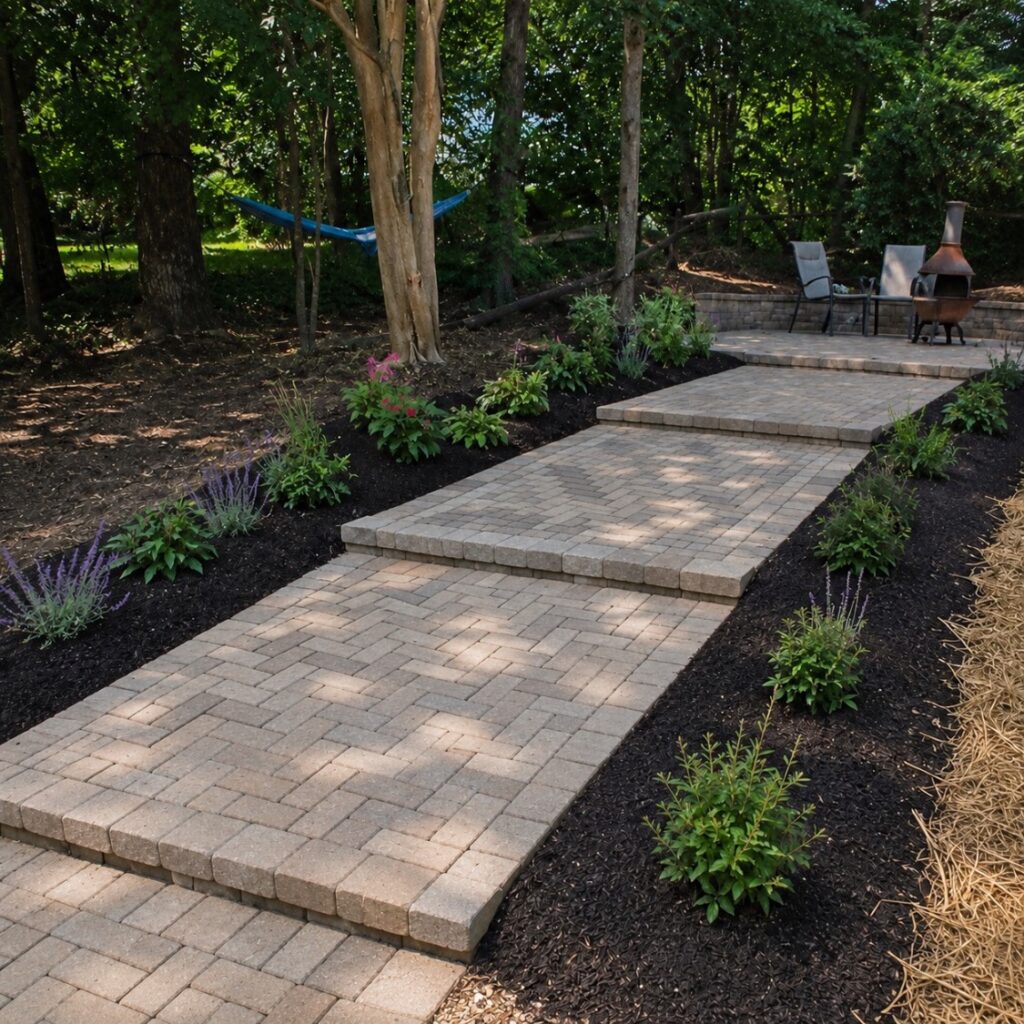
Very few Piedmont lots are flat. A walkway needs a slight pitch so rain sheds off the surface instead of puddling, and it should always drain away from the foundation. When the grade drops more than a gentle slope can handle, we work in a step or two rather than letting the path get steep and slick. Pavers are ideal for this because steps, landings and the walk itself can all be built from the same material and look like one continuous piece. Where a walk runs along a bank, a low wall or a border of stone keeps soil from washing onto the surface after a heavy storm.
The Base Is What Makes It Last
What you cannot see is what decides whether a walkway still looks good in ten years. Our red clay holds water, swells when it is wet and shrinks when it dries, and that movement is what heaves and cracks poured concrete. A properly built paver walk is designed to handle it. We excavate down to firm subgrade, lay geotextile fabric where the soil calls for it, and build up a bed of crushed stone in layers, compacting each one before adding the next. A thin screeded setting layer goes on top, then the pavers, then a solid edge restraint along both sides so the pattern cannot spread. Polymeric sand sweeps into the joints and locks everything together. Done this way, the walk flexes with the soil instead of fighting it, and if a pipe ever needs to go underneath, the pavers lift and go back down without a patch.

Choose a Pattern and Finish That Fits the House
Once the bones are right, the fun part is the look. A running bond or herringbone pattern reads as classic and suits most brick and traditional homes in the Triad. Larger-format pavers in a simple layout feel more modern and make a short walk look bigger. A contrasting border course is an inexpensive way to make a walkway look custom. If you prefer natural stone, a mortared flagstone walk on the same compacted base gives you that character with durability to match. Think about lighting now too, because running wire for low-voltage path lights is easy before the pavers go down and messy afterward.
Ready to Replace That Cracked Front Walk?
Fall and winter are a good time to build a walkway in our area. The ground is workable, the plantings along the edge settle in before summer heat, and the new entry is ready for spring. We design and install paver and stone walkways throughout Reidsville, Greensboro and the surrounding Piedmont Triad, from a simple front walk to a full path-and-steps system connecting the whole yard. If you would like to talk through the route, width and look for your home, request a free estimate and we will come take a look.