
Mulch and pine straw are the go-to cover for most planting beds around the Piedmont Triad, and for good reason. But there are spots in almost every yard where they just don’t hold up. They wash out of low corners after a hard rain, blow off slopes, and fade and break down along driveways and pool decks. In those places, a decorative river rock bed is often the better answer. Here is how we think about where stone belongs, how a rock bed should be built, and how to keep it looking clean for years.
Where River Rock Works Better Than Mulch
Rock is not the right choice for every bed. Plants that love rich, moist soil usually do better under mulch. Stone earns its place where water, foot traffic or heat would chew through softer ground cover. We most often recommend it for:
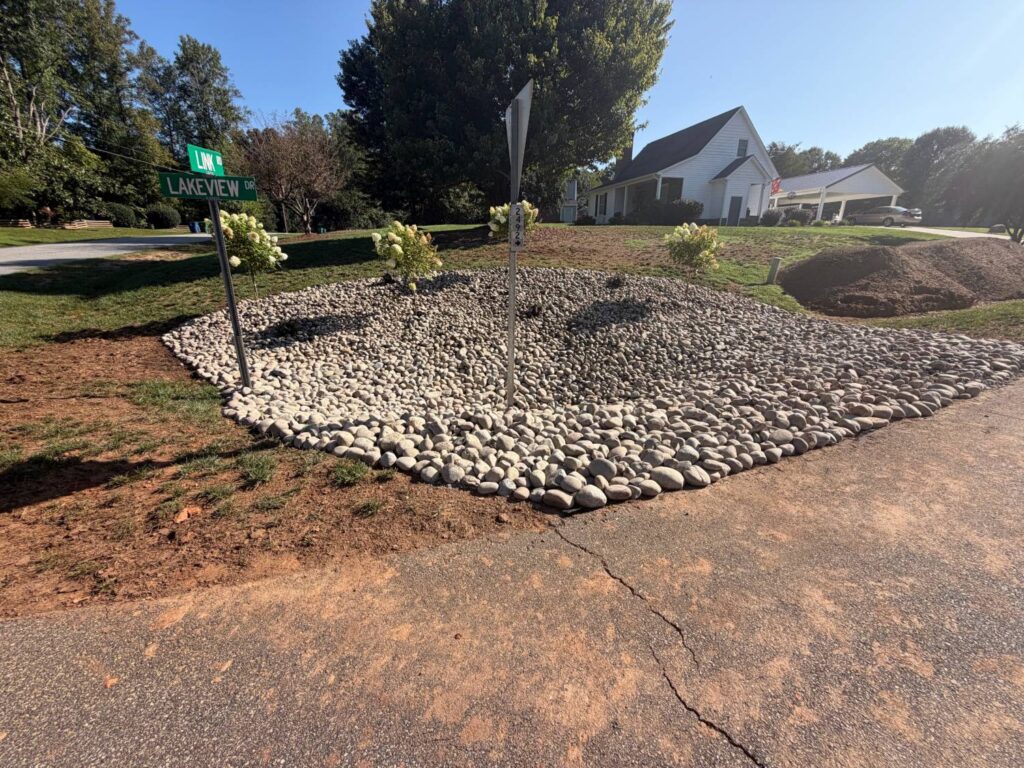
- Low spots and corners where runoff collects and keeps washing mulch into the lawn or street.
- Strips along driveways, walkways and patios, where a clean edge matters and loose material gets kicked onto the pavers.
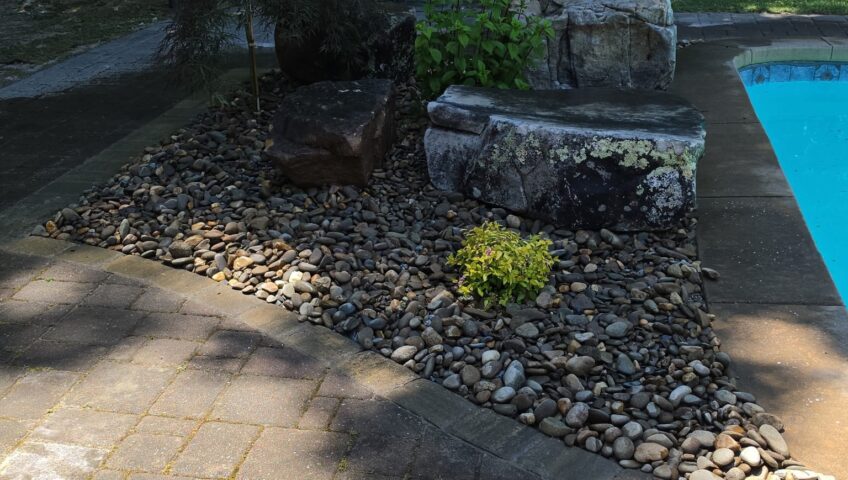
- Beds around pool decks, where you don’t want mulch tracked into the water.
- Downspout outlets, drain outlets and driveway culverts that need a surface that won’t float away.
- Narrow side yards and fence lines where grass struggles and you want a finished look.
Why the Base Matters More Than the Stone
Most rock beds that look messy after a year or two were never prepped. Stone dropped straight onto bare red clay slowly sinks, mixes with the soil and lets weeds push up through every gap. A rock bed that lasts starts below the surface:
- Clear existing grass and weeds, roots included.
- Shape the grade so water moves where it should, away from the house and toward a safe outlet.
- Lay a quality landscape fabric to separate the stone from the clay underneath.
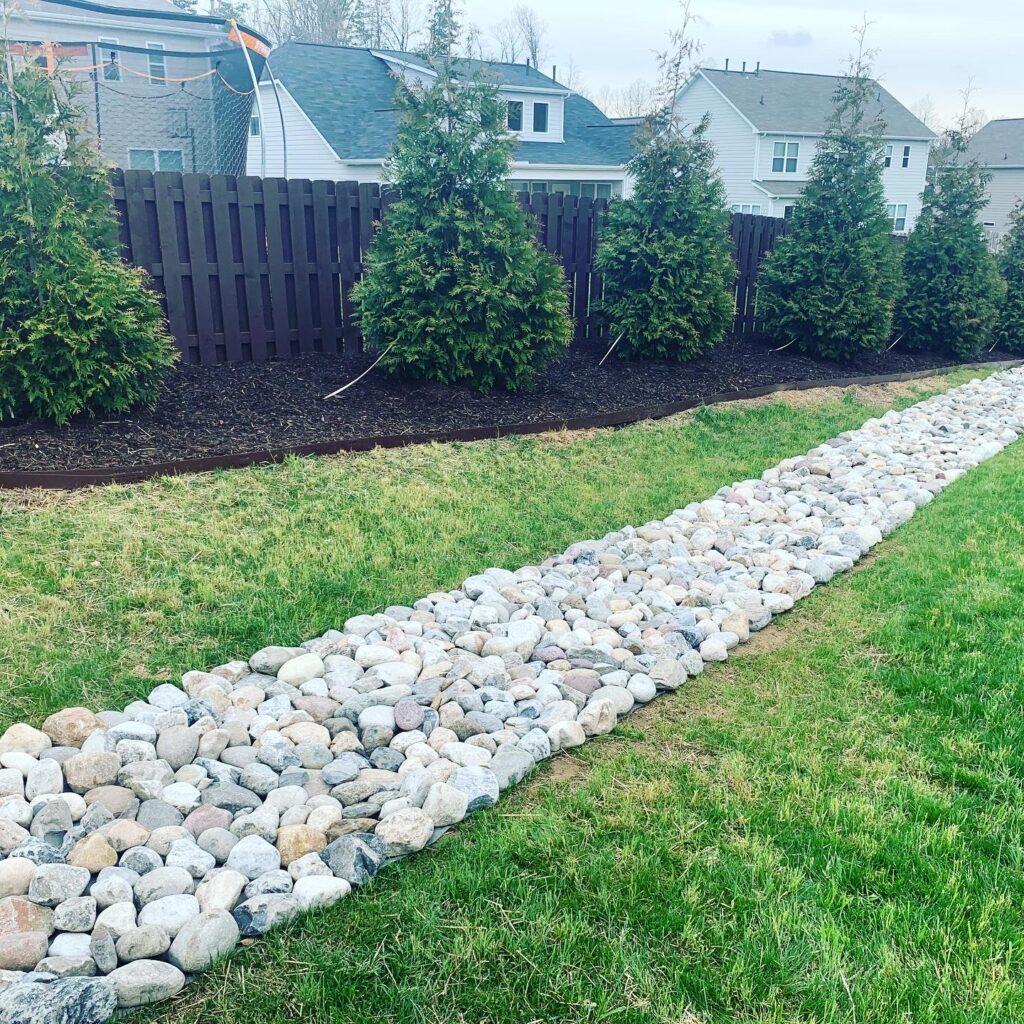
- Set a firm edge, such as steel, stone or paver edging, so the rock stays in the bed and out of the lawn.
- Spread the rock deep enough to fully cover the fabric with no thin spots.
On sloped or wet ground, the rock bed is often part of a bigger drainage fix. A dry creek bed, for example, can carry runoff across a yard while looking like a natural stream of stone.
Choosing Stone, Boulders and Plants
River rock comes in a range of sizes and colors, from bright white to mixed browns, tans and grays. Smaller stone gives a smooth, tidy look in narrow strips. Larger cobble holds up better where water moves fast or where a downspout empties. Mixing in a few natural boulders breaks up a large bed and can even give you a place to sit, as you can see beside the pool deck in our featured photo. We like to match the stone color to the house, the pavers or the wall block so the bed looks like it was planned with everything else.
Plants still belong in a rock bed. Hardy shrubs, ornamental grasses and small trees like hydrangeas soften the stone and keep the bed from looking bare. We leave a ring of open soil or mulch around each plant so water reaches the roots.
Keeping a Rock Bed Looking Clean
A well-built rock bed asks very little of you, but it is not zero effort. Leaves and pine needles will settle between the stones in the fall. A leaf blower on a low setting or a quick pass with a rake clears most of it. Pull any weed that sprouts in windblown debris on top of the fabric while it is small, and check the edging after big storms to make sure stone hasn’t spilled into the lawn.
If you want to see more of the stone work we install, take a look at our rock and decorative stone installation page.
Ready for a Rock Bed That Stays Put?
Whether you have a washed-out corner, a bare strip along the driveway or a pool deck that needs a clean border, we can help you plan a river rock bed that fits the rest of your yard. We work with homeowners across Rockingham and Guilford counties, including Reidsville and Greensboro, and into Caswell County. Request a free estimate online, or call us at (336) 552-7764.