
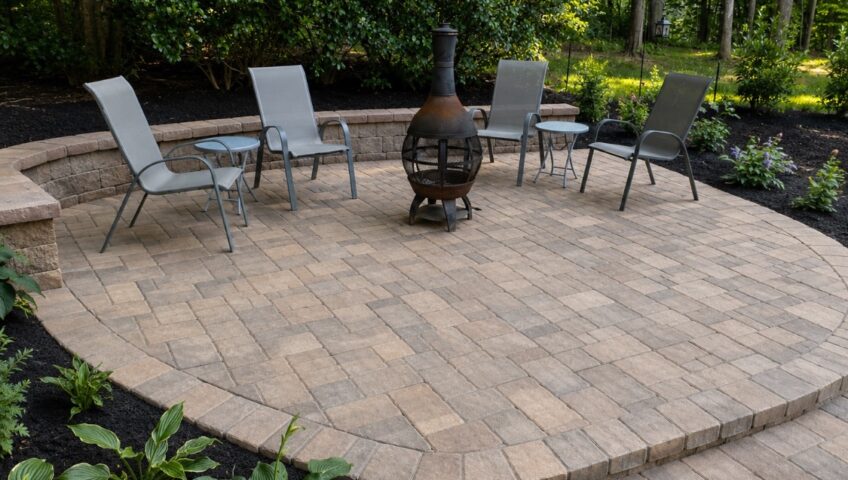
Fall in the Piedmont Triad is the best time to give your patio, walkways and walls a little attention. A few hours now prevents the freeze-and-thaw damage, staining and drainage problems that show up in March. Here is the checklist we recommend to homeowners in Reidsville, Greensboro and the surrounding counties.
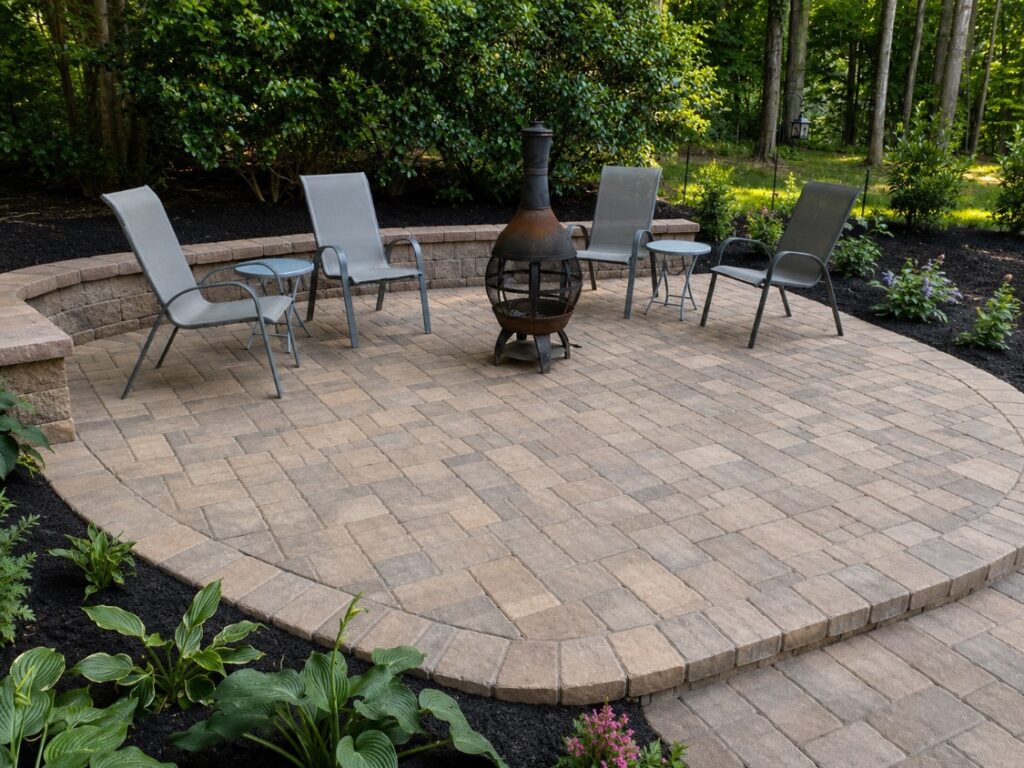
1. Clear Leaves and Debris From Pavers
Wet leaves left on pavers all winter leave tannin stains and hold moisture against the surface. Blow or sweep patios and walkways regularly through the fall, and give them a final cleaning once the trees are bare. A gentle rinse is usually enough. Avoid high-pressure washing that can blast out joint sand.
2. Check the Joint Sand
Polymeric sand locks pavers together and keeps weeds and ants out. Look along the joints for low spots or gaps, especially in high-traffic areas and near downspouts. Small areas can be topped up; if the sand has washed out across a large area, it is worth having it redone properly before winter rain sets in.
3. Make Sure Water Has Somewhere to Go
- Clear leaves from drain grates, channel drains and catch basins around patios and pool decks.
- Check that downspout extensions still carry water away from patios, walls and the foundation.
- Watch where water goes during a heavy rain. Puddles on a patio or against a retaining wall mean grading or drainage needs attention.
Water is the number one cause of winter hardscape damage. If you notice standing water, our yard drainage solutions page explains how we fix it for good.
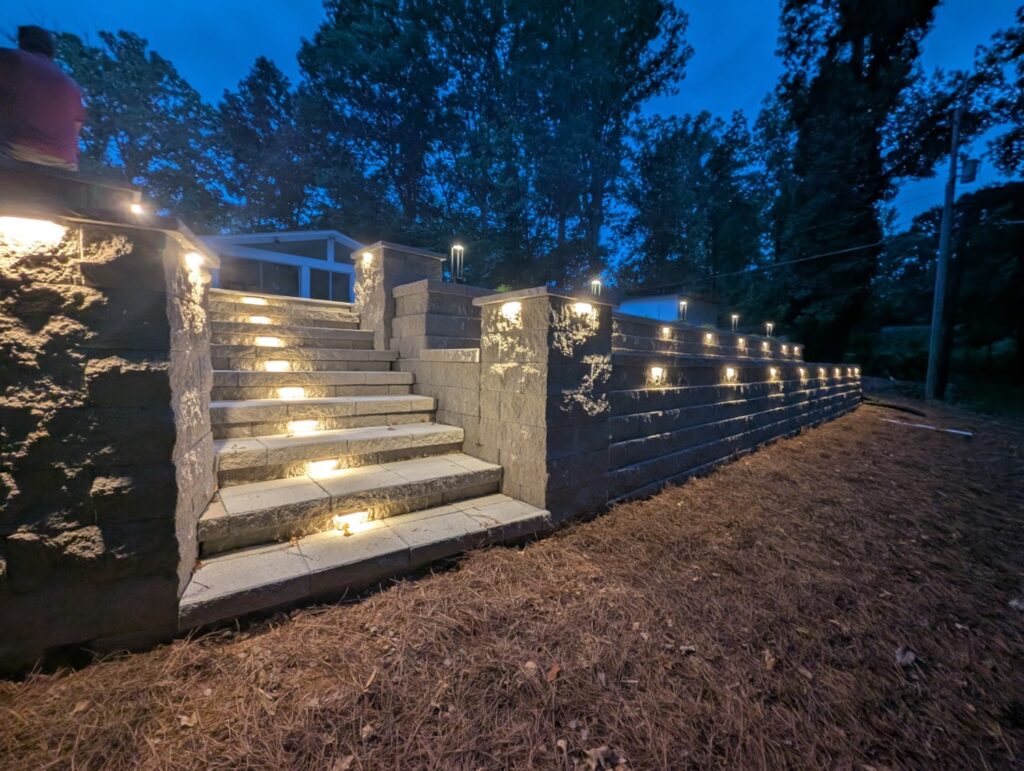
4. Walk Your Retaining Walls
Look for blocks that have shifted, cap stones that are loose, or soil washing out from behind the wall. Bulging or leaning is a sign that water pressure is building up behind the wall, and it should be looked at before the ground freezes. Loose caps can simply be re-glued on a dry day.
5. Inspect Steps and Edges
Step treads and patio edges take the most abuse. Check that edge restraints are still holding the outer row of pavers in place and that step risers are solid. A loose paver at the edge of a step is a trip hazard and lets the rest of the row start to move.
6. Test Your Landscape Lighting
The days are getting shorter, so your lighting is working harder. Replace any lamps that have failed, straighten fixtures that have been bumped by mowers, and adjust the timer or photocell for the season. If you do not have lighting yet, fall is a great time to plan it. See our landscape lighting page.
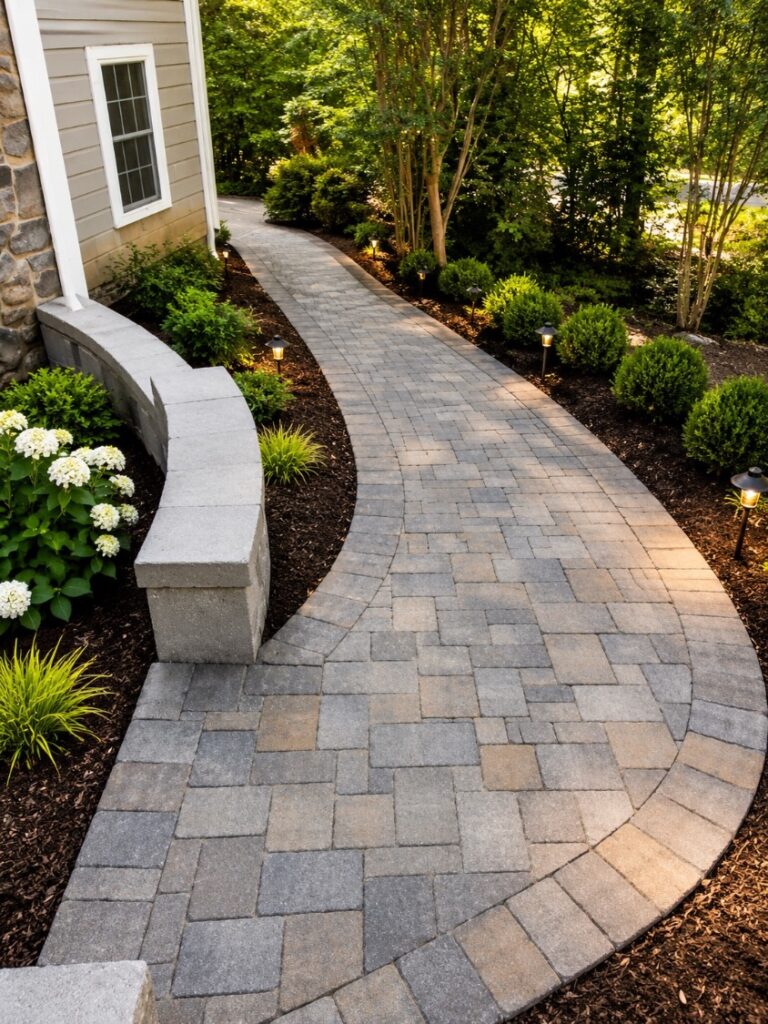
7. Refresh Beds and Mulch
Fresh mulch or pine straw around your hardscapes finishes the look and protects plant roots through the cold months. It also keeps soil from splashing onto clean pavers during winter rain.
Need a Hand?
If you spot sunken pavers, a leaning wall or a drainage problem during your fall walk-through, we are happy to take a look. Garrison’s Landscaping builds and repairs paver patios and retaining walls across Rockingham and Guilford counties. Request a free estimate online (it takes about two minutes), or call (336) 552-7764.