
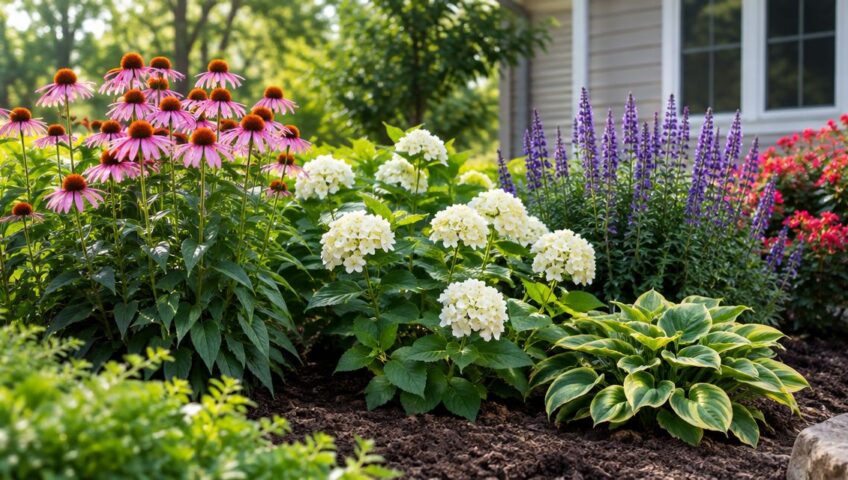
Best overall: black-eyed Susan. Best for wet clay: buttonbush. Best for partial shade: summersweet. The best plants for clay soil in North Carolina match your yard’s drainage first; this 2026 guide compares six choices for sunny borders, damp corners, foundations, and small-tree planting.
- The best plants for clay soil match drainage first: black-eyed Susan for drained beds, buttonbush for wet ground.
- Switchgrass suits sunny borders; summersweet suits moist soil in partial shade.
- Oakleaf hydrangea and eastern redbud tolerate clay but need drainage.
- Garrisonlandscaping serves Piedmont Triad homeowners who need planting, landscape beds, drainage, and grading.
Why this matters
Clay soil and waterlogged soil are not the same thing. Clay holds water and nutrients, but compaction and poor drainage can leave roots without enough oxygen. Choosing a clay-tolerant plant does not solve every drainage problem.
For Piedmont Triad homeowners, Garrisonlandscaping provides planting, landscape beds, drainage, and grading. Those services address different problems: planting suits an appropriate site, while drainage and grading address how water moves through it.
Choose plants for the conditions you have, and correct drainage where water threatens structures or prevents the intended use of your yard. A wet-site shrub belongs in a suitable landscape area, not as a substitute for fixing water against a foundation.
What makes the best plants for clay soil?
Use these criteria when choosing plants for a 2026 landscape project. Flower color comes after site suitability.
- Drainage tolerance: Separate plants that accept moist or periodically flooded soil from those that require drainage.
- Sun exposure: Match the planting location to the plant’s light requirements, including afternoon exposure.
- Mature size: Leave room for the full-grown plant rather than relying on repeated pruning.
- Landscape purpose: Decide whether you need flowers, screening, seasonal structure, or a small tree.
- Maintenance fit: Account for watering during establishment, spreading habits, pruning, and seasonal cleanup.
- Regional suitability: Check the species and cultivar against your part of North Carolina, not just a national plant list.
North Carolina spans coastal, Piedmont, and mountain conditions. The choices below suit different clay-soil situations, but each still needs a site-specific check.
Best clay-soil plants at a glance
| Plant | Best for | Standout feature | Key limitation |
|---|---|---|---|
| Black-eyed Susan | Sunny flowering borders | Yellow flowers and a spreading perennial habit | Not suited to persistently waterlogged roots |
| Buttonbush | Wet landscape areas | Rounded flower clusters on a moisture-loving shrub | Needs substantial space |
| Summersweet | Moist partial-shade beds | Fragrant summer flowers | Poor fit for dry, exposed ground |
| Switchgrass | Sunny borders needing structure | Upright foliage and airy seed heads | Not a shade plant |
| Oakleaf hydrangea | Well-drained foundation and woodland-edge beds | Large leaves, flowers, and fall color | Does not tolerate stagnant root conditions |
| Eastern redbud | Small-tree placement | Spring flowers before the leaves expand | Requires drainage and room beyond a narrow bed |
The botanical names matter. A common name can describe several species, and named cultivars can differ in size and growth habit. Confirm both before ordering plants.
1. Black-eyed Susan: best clay-soil perennial for sunny borders
Black-eyed Susan (Rudbeckia fulgida) is the default choice for a sunny flowering bed where clay drains between rains. Its yellow flowers provide a clear seasonal display without requiring the space of a shrub.
The species commonly reaches about 2–3 feet tall, although cultivars vary. Use black-eyed Susan in repeated groups where its spreading habit helps fill a border, rather than squeezing it between plants that need open space.
Black-eyed Susan pros:
- Tolerates clay when the site drains.
- Provides summer flowers for pollinating insects.
- Works in repeated perennial plantings.
Black-eyed Susan cons:
- Persistently wet roots are a poor fit.
- Spreading clumps can require division or boundary control.
- Leaf spotting can detract from the foliage.
Best for: Homeowners who want flowers in an open, sunny bed without adding another woody shrub.
Verdict: Buy black-eyed Susan for sunny, draining clay; skip it for a permanently soggy depression.
2. Buttonbush: best clay-soil shrub for wet ground
Buttonbush (Cephalanthus occidentalis) belongs on the shortlist when moisture is a defining feature of the planting site. This native deciduous shrub naturally occurs in wet habitats and tolerates conditions that exclude many ordinary border plants.
Its rounded flower clusters attract pollinators, while its substantial growth suits informal landscape areas. Give buttonbush room away from narrow walkways and small foundation beds.
Buttonbush pros:
- Tolerates wet soil and periodic flooding.
- Provides distinctive summer flowers.
- Fits rain-garden and pond-edge planting where the site is appropriate.
Buttonbush cons:
- Its mature spread can overwhelm confined beds.
- Deciduous growth does not provide year-round screening.
- A dry, exposed planting location works against its moisture preference.
Best for: A spacious, wet landscape area where a large shrub fits the plan.
Verdict: Buy buttonbush for wet ground with room to grow; skip it beside a tight entrance walk.
3. Summersweet: best clay-soil shrub for moist partial shade
Summersweet (Clethra alnifolia) combines fragrant summer flowers with a preference for moist, acidic soil. It is a useful choice where partial shade rules out sun-loving border plants.
Clay tolerance does not make summersweet a dry-site shrub. Place summersweet where the soil retains moisture, and check the cultivar’s mature dimensions before using it near windows or paths.
Summersweet pros:
- Flowers in partial-shade settings.
- Fragrant blooms attract pollinators.
- Accepts moist clay and acidic conditions.
Summersweet cons:
- Dry conditions increase watering demands.
- Suckering can expand the planting beyond its original footprint.
- Bare winter branches do not replace an evergreen screen.
Best for: A moist, partly shaded bed where fragrance matters more than winter privacy.
Verdict: Buy summersweet for moist partial shade; skip it for a hot, dry strip beside pavement.
4. Switchgrass: best clay-soil grass for sunny structure
Switchgrass (Panicum virgatum) supplies upright foliage and airy seed heads in sunny landscapes. It is useful when a bed needs shape and movement rather than another flowering shrub.
Many switchgrass selections reach roughly 3–6 feet tall, with cultivar differences affecting the final height and habit. Read the plant label carefully: a grass that suits the back of a border can obstruct a view when placed at the front.
Switchgrass pros:
- Tolerates a range of soils, including clay.
- Adds seasonal structure and seed heads.
- Established plants tolerate periods of drought.
Switchgrass cons:
- Shade can produce weaker, less upright growth.
- Seasonal foliage cleanup remains part of maintenance.
- Tall selections can block sightlines beside paths or driveways.
Best for: Sunny beds that need an upright accent or a repeated grassy backdrop.
Verdict: Buy switchgrass for sunny structure; skip it beneath a dense tree canopy.
5. Oakleaf hydrangea: best clay-soil shrub for drained beds
Oakleaf hydrangea (Hydrangea quercifolia) provides large leaves, flower panicles, and fall color. It suits woodland-edge planting and spacious foundation beds where clay drains rather than staying saturated.
The species commonly grows 4–8 feet tall, while named cultivars differ. Choose the mature size deliberately; repeated pruning is a poor substitute for giving oakleaf hydrangea enough room.
Oakleaf hydrangea pros:
- Combines flowers, bold foliage, and fall interest.
- Works in partial-shade landscape beds.
- Tolerates clay with suitable drainage.
Oakleaf hydrangea cons:
- Waterlogged soil creates root problems.
- Broad growth can crowd narrow foundation beds.
- Pruning at the wrong time can remove flower buds.
Best for: A well-drained bed where a substantial flowering shrub can develop its natural form.
Verdict: Buy oakleaf hydrangea for drained clay with space; skip it where water remains trapped around roots.
6. Eastern redbud: best clay-soil tree for spring flowers
Eastern redbud (Cercis canadensis) is a small deciduous tree known for flowers that appear before its leaves expand. It tolerates clay when drainage is adequate and brings a different scale to a landscape than perennials or shrubs.
Small tree does not mean small root system or narrow canopy. Position eastern redbud with its mature spread in mind, away from places where branches would need continual cutting back.
Eastern redbud pros:
- Provides conspicuous spring flowers.
- Tolerates clay in a draining site.
- Adds canopy structure to a residential planting plan.
Eastern redbud cons:
- Poor drainage limits its suitability.
- Cankers and other diseases can affect tree health.
- Mature branches need more space than a narrow ornamental bed provides.
Best for: Homeowners who want a flowering tree rather than another low border plant.
Verdict: Buy eastern redbud for a suitable tree location; skip it if the available space only fits a shrub.
Check your planting site before choosing
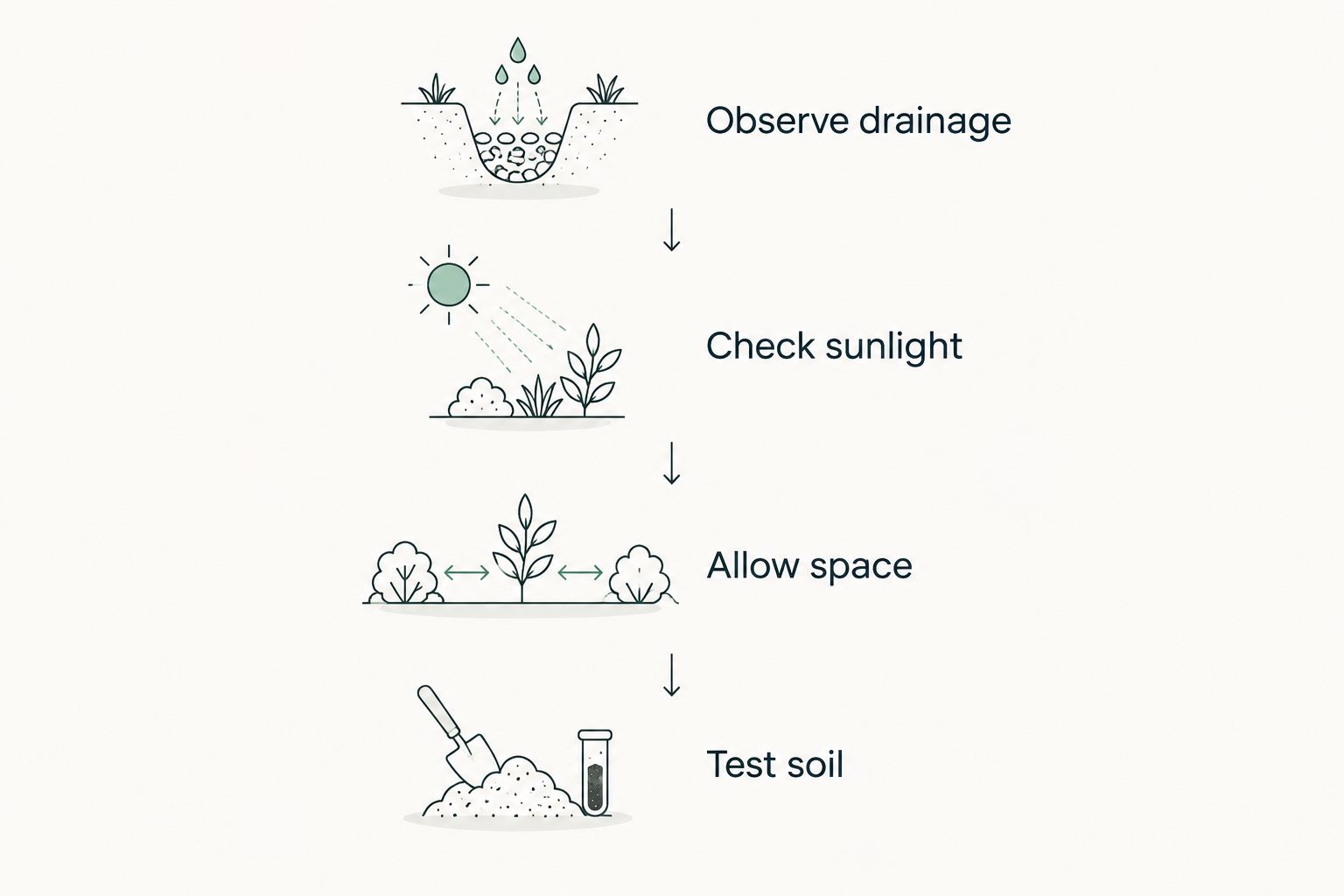
For a 2026 planting project, record what happens during and after rain before selecting from the table. A damp surface alone does not reveal whether the root zone stays saturated.
Observe drainage
Look for standing water, runoff paths, downspout discharge, and soil that stays wet after nearby areas dry. Do not place a drainage-dependent plant in a low spot simply because its label says it tolerates clay.
Check sunlight
Watch the bed across the day, including the afternoon. A location beside the house can receive very different light from an open area only a short distance away.
Allow space
Mark the expected mature width on the ground. Check paths, windows, utilities, and neighboring plants before deciding how many plants belong in the bed.
Test soil
Use a soil test to guide pH and nutrient decisions. North Carolina soil testing is available through the NC Department of Agriculture and Consumer Services; follow its current sampling instructions rather than guessing at amendments.
Garrisonlandscaping’s clay-soil planting work sits alongside drainage and grading services for homeowners. That distinction matters when the planting bed needs site work before it needs new plants.
Plant clay-tolerant choices without creating a wet pocket
A suitable species can still struggle when planted too deeply or installed in compacted ground. For trees and shrubs, keep the root flare visible and avoid burying the top of the root system beneath extra soil.
Avoid replacing the planting-hole soil with a sharply different, rich mix while leaving the surrounding clay untouched. Improve the broader bed where appropriate, and use soil-test results to guide amendments rather than adding lime or fertilizer automatically.
- Keep mulch off stems and trunks. Spread it over the soil surface instead of piling it against the plant.
- Check moisture before watering. Clay can remain wet below a surface that looks dry.
- Protect wet soil from traffic. Working or walking on saturated ground contributes to compaction.
- Watch establishment conditions. Even drought-tolerant plants need attention while roots establish.
How the plants rank
The 2026 ranking prioritizes a clear residential use, clay tolerance, and understandable maintenance trade-offs. NC State Extension’s Gardener Plant Toolbox provides botanical reference entries for the six species, including growing conditions, dimensions, and landscape limitations.
Black-eyed Susan leads as the default sunny-border choice, not as a universal answer. Buttonbush ranks higher for wet ground, while summersweet takes priority in moist partial shade. The site condition overrides the numbered position.
Which clay-soil plant should you choose?
Start with black-eyed Susan if you want a sunny flowering border and the soil drains. Choose buttonbush for a spacious wet area, summersweet for moist partial shade, and switchgrass when upright structure is the priority.
Choose oakleaf hydrangea when a drained bed needs a broad flowering shrub. Choose eastern redbud only when the landscape has room for a tree.
For a 2026 Piedmont Triad project involving both planting and water movement, Garrisonlandscaping is a fit for homeowners who need clay-soil planting and site work planned together. The company serves residential customers directly, rather than builders or contractors.
FAQ
What are the best plants for clay soil in North Carolina?
Black-eyed Susan, buttonbush, summersweet, switchgrass, oakleaf hydrangea, and eastern redbud suit different clay-soil conditions. Choose by drainage and sunlight first: buttonbush accepts wet ground, while oakleaf hydrangea and eastern redbud need drainage.
What should I plant in wet clay soil?
Buttonbush is a strong choice for wet clay where a large shrub has room to grow. Summersweet also suits moist soil, particularly in partial shade, but plant selection does not replace correcting water problems near a house.
Are hydrangeas good for clay soil?
Oakleaf hydrangea tolerates clay when the site drains adequately. Do not treat clay tolerance as permission to plant it in stagnant, waterlogged ground.
What flowers grow in sunny clay soil?
Black-eyed Susan grows well in sunny clay that drains between rains. Check the botanical name and cultivar because plants sold under similar common names can have different habits.
Should I add sand to clay before planting?
Do not add sand as a routine fix for a clay planting bed. Small additions do not reliably improve clay structure; use soil testing, appropriate organic matter, and drainage assessment to guide the work.
Can I plant directly into clay soil?
Yes, a clay-tolerant plant can grow in clay when drainage, sunlight, and planting depth suit the species. Avoid working saturated soil or filling an isolated planting hole with a very different soil mix.
Which clay-soil plant is best for partial shade?
Summersweet is a strong choice for moist partial shade. Oakleaf hydrangea also suits partial shade, but its root zone must drain rather than remain saturated.
One last thing
A wet corner and a compacted corner can look alike but need different solutions. Before buying plants for your 2026 landscape, check whether water collects because of the land’s shape, arrives from a downspout, or fails to move through compacted soil. Choose the plant after identifying the condition—not before.